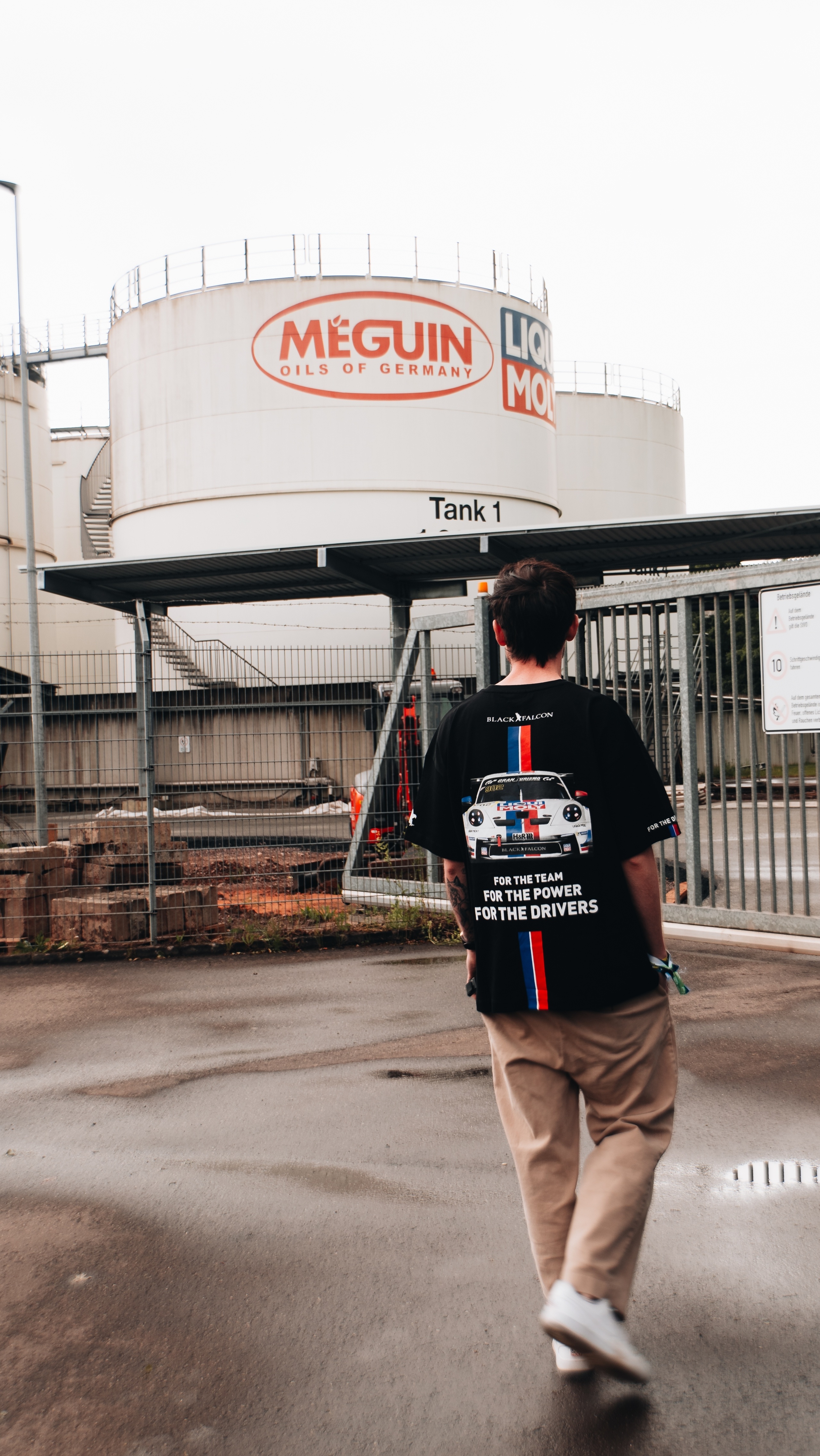
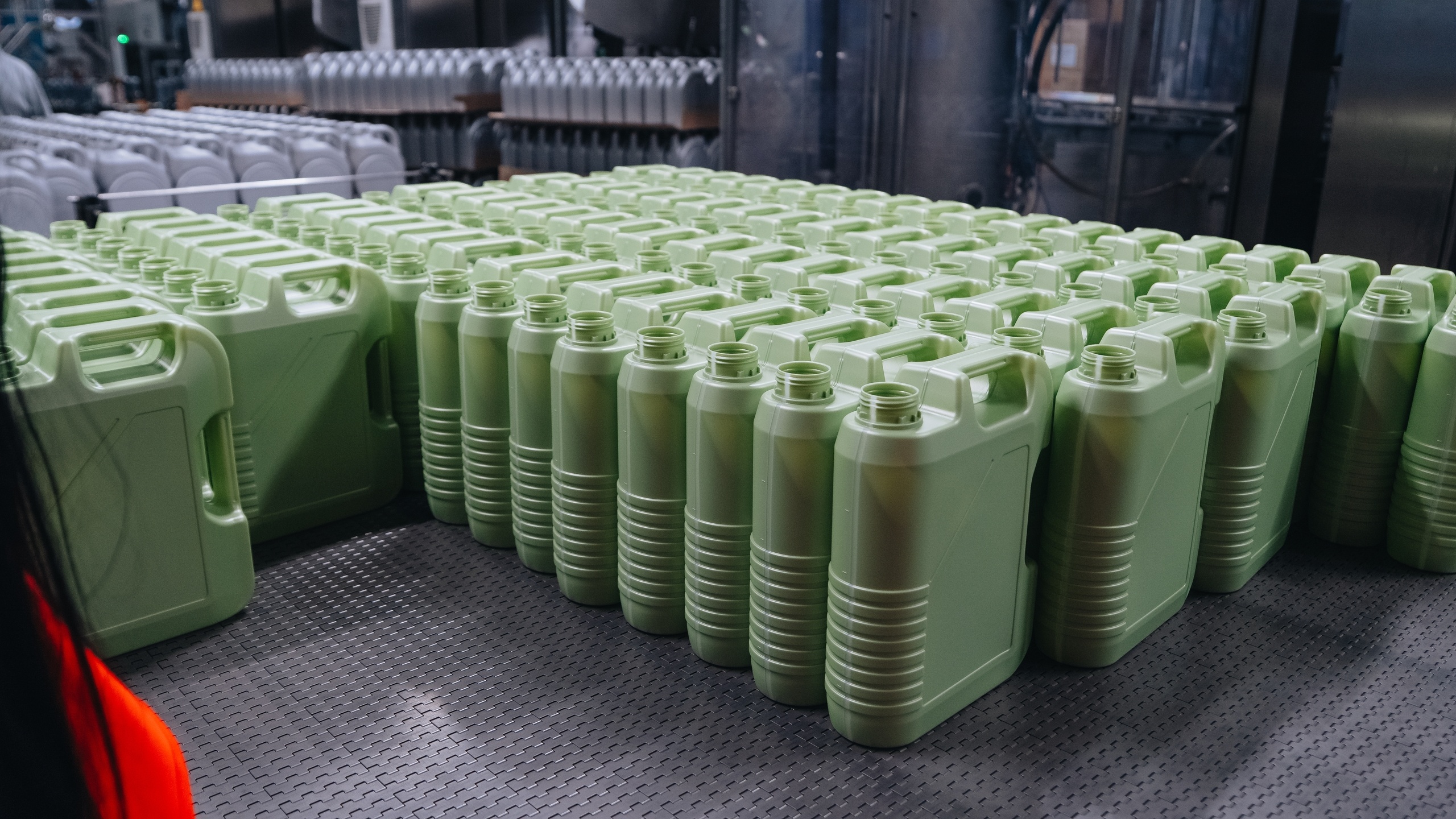
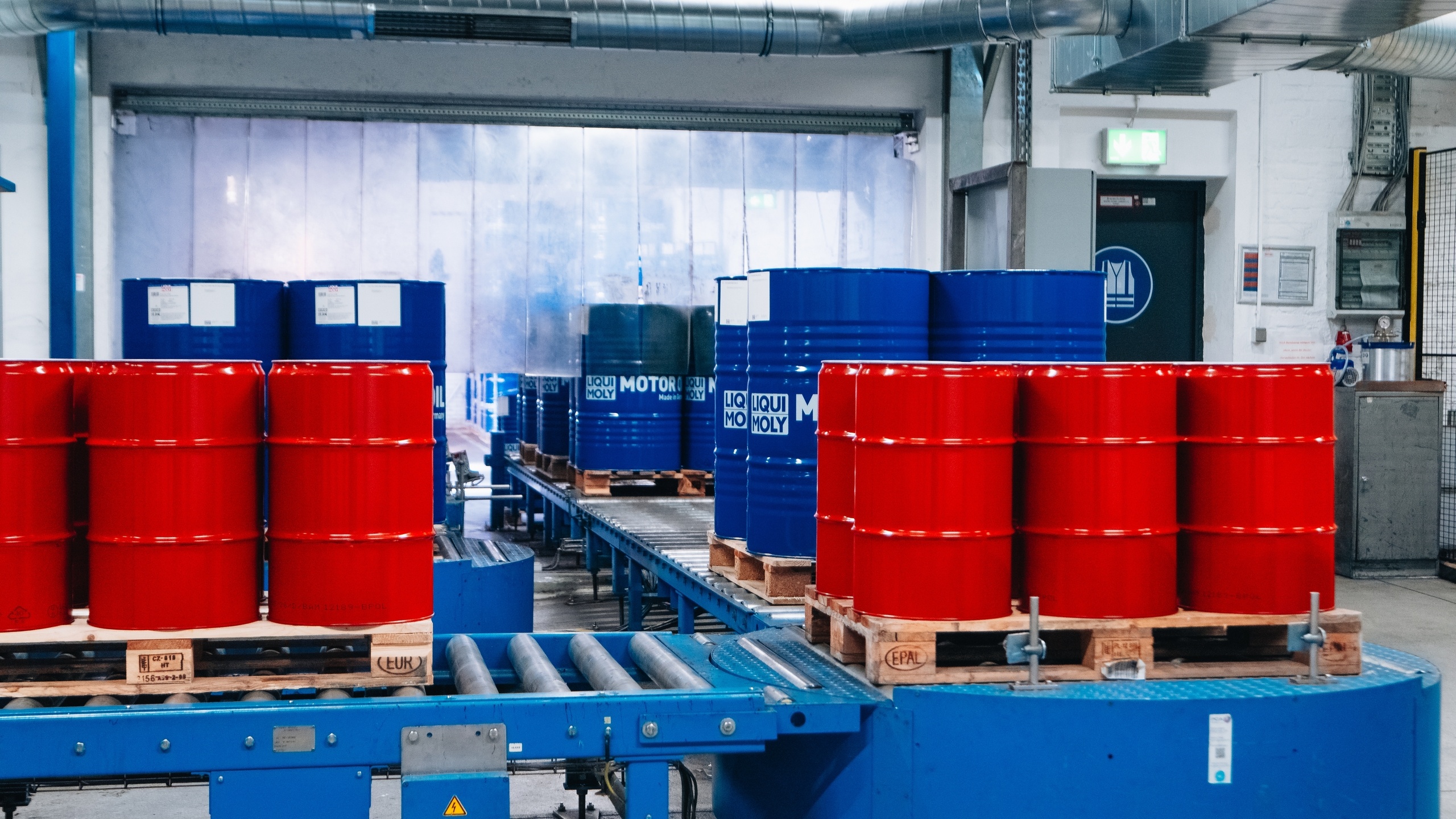
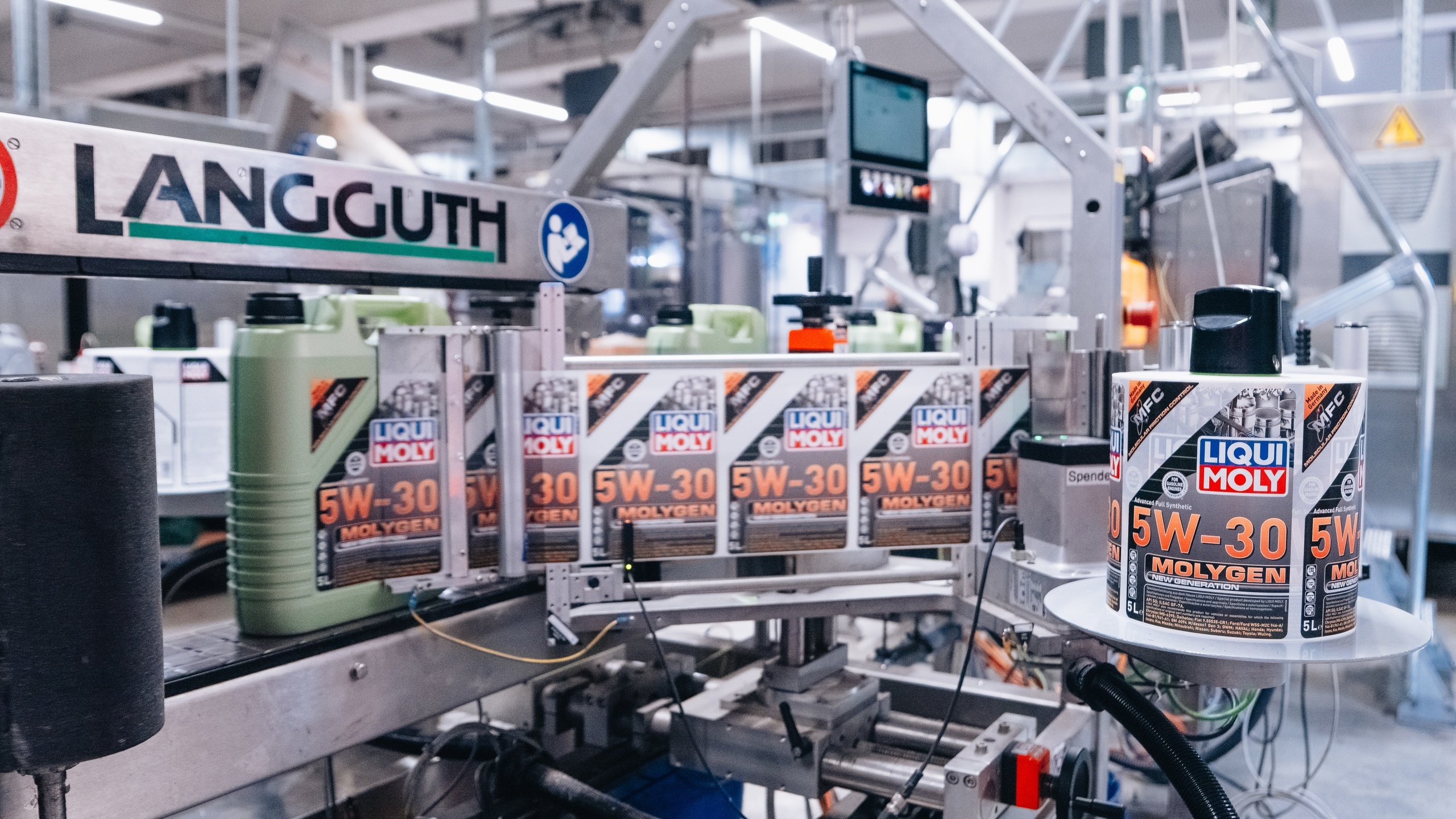
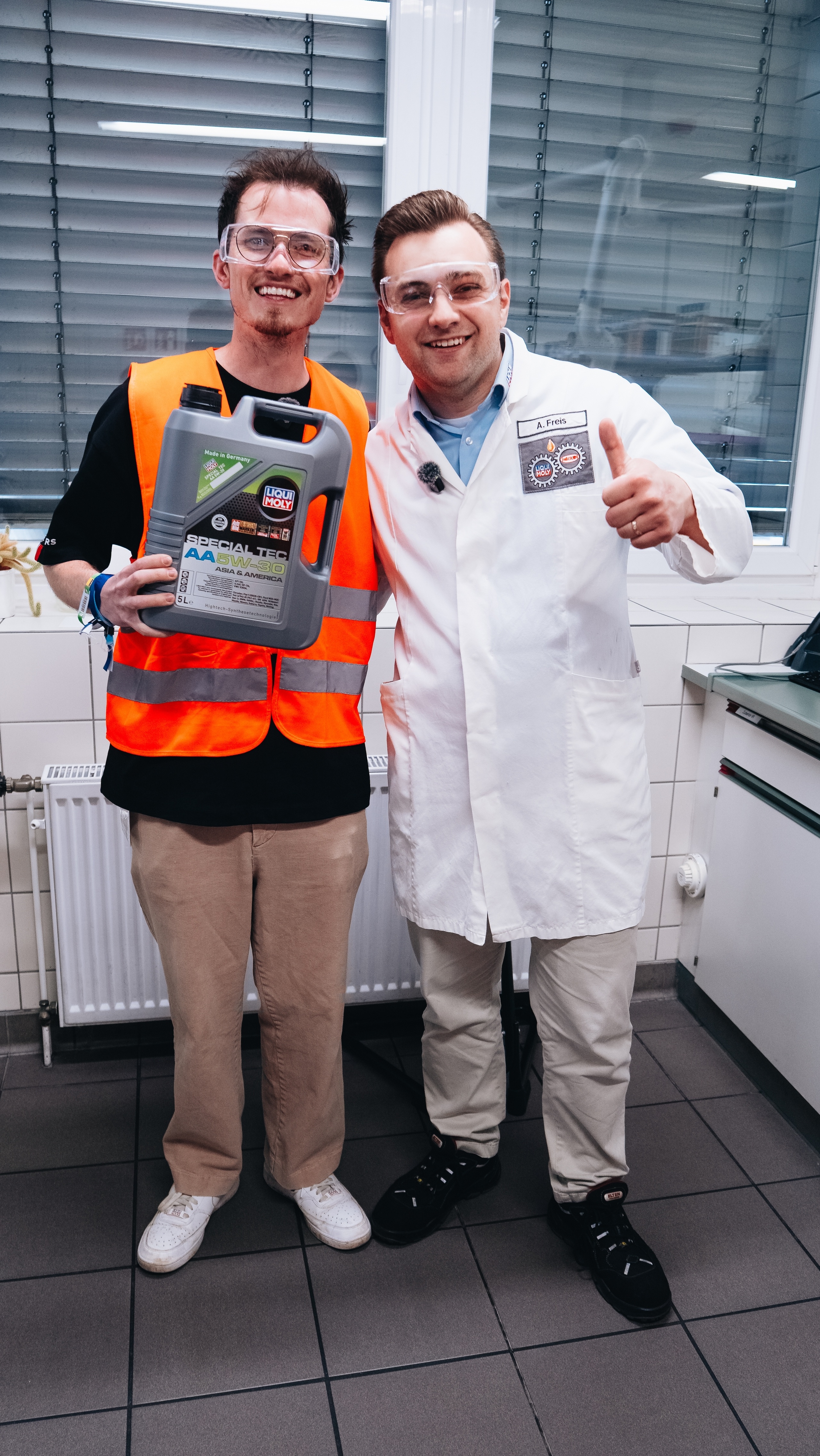
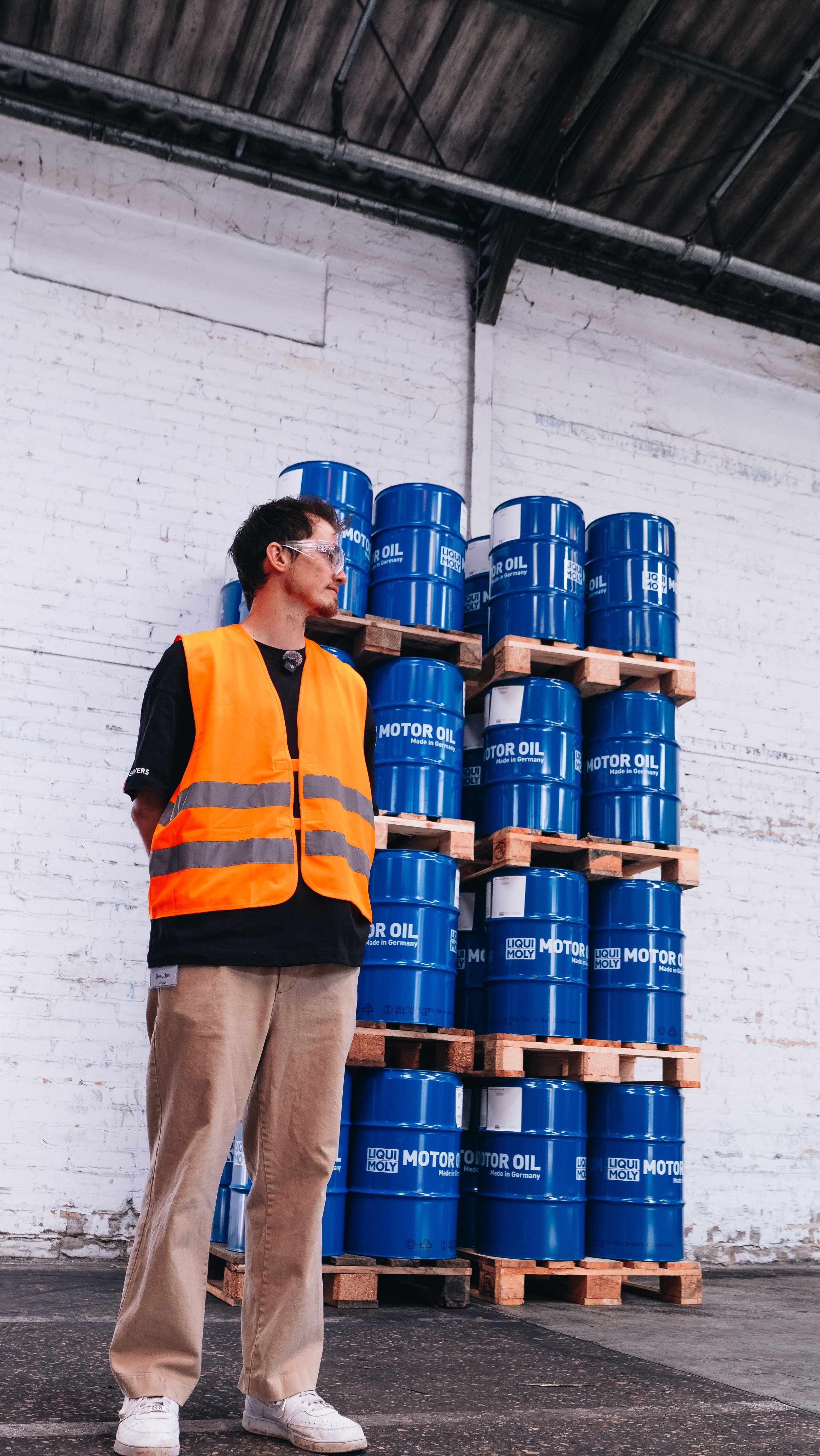
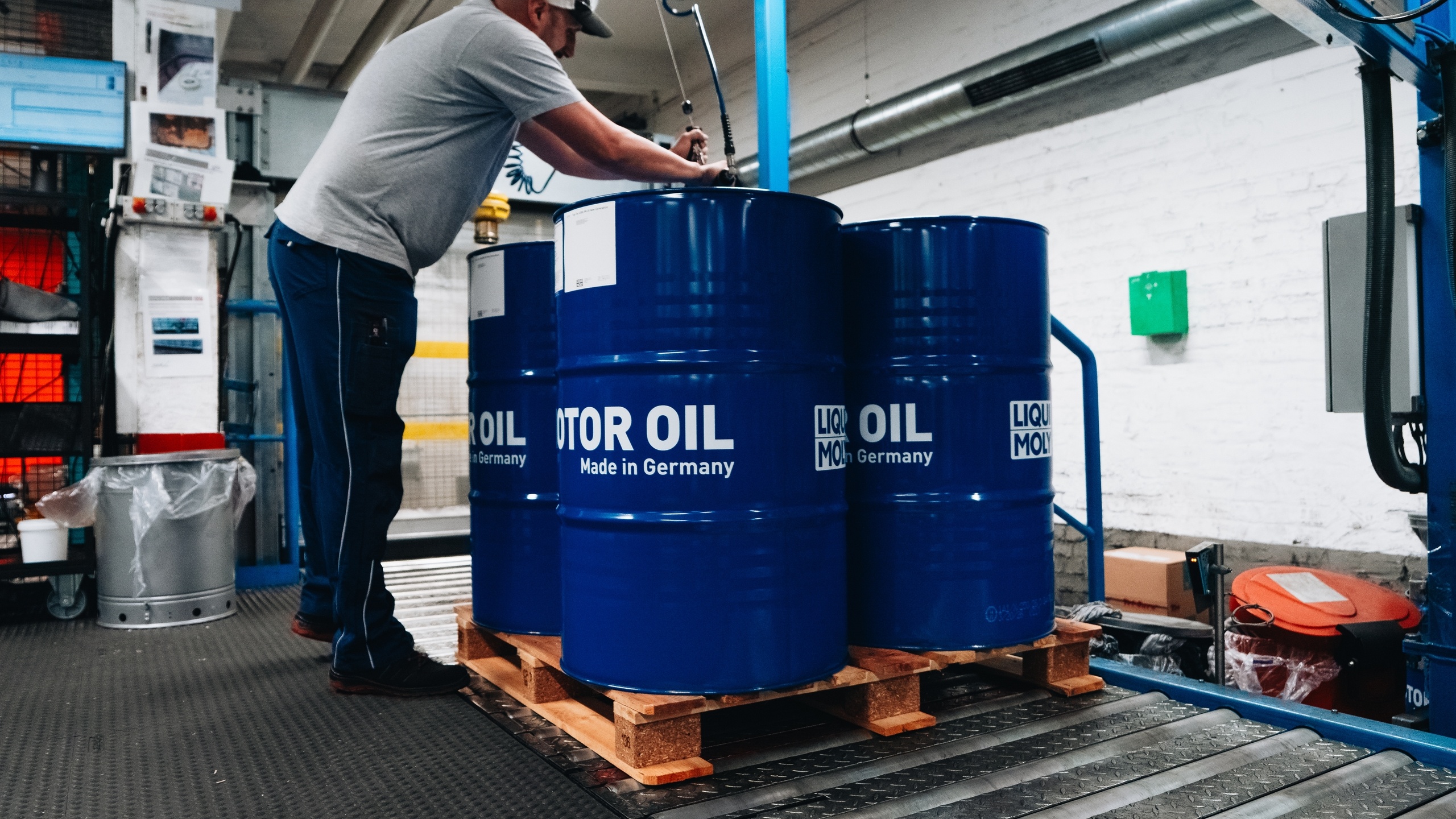
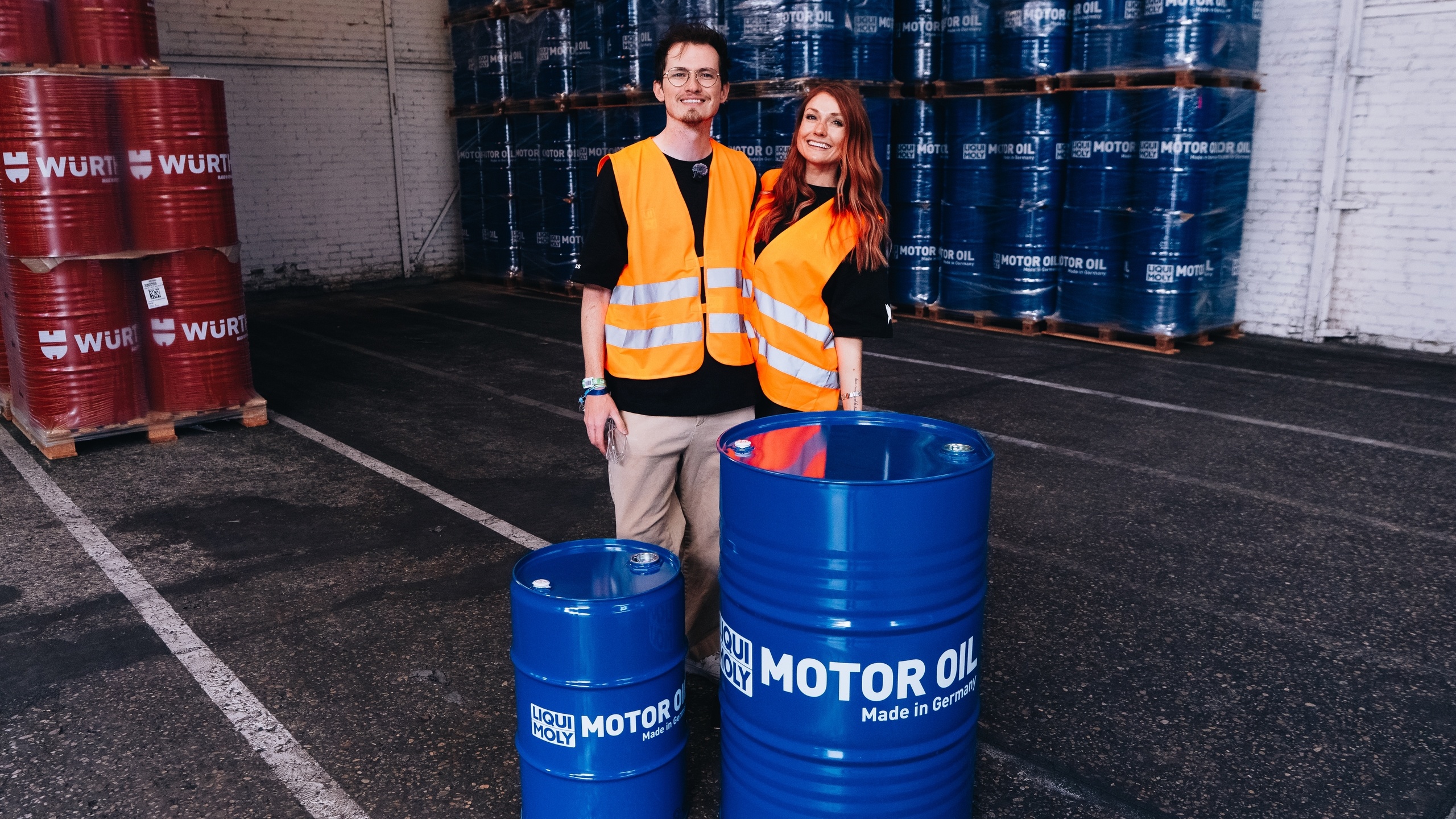
One of the best oil companies in the world manufactures its products in between a chocolate factory and a coffee shop. It sits in Saarlouis, Germany, on the French border, in a complex that opened in 1847 as a refinery, became a carriage-grease maker, sold petroleum for street lamps, made varnishes for the European trade, and slowly turned itself into one of the most respected oil houses on the planet, and we're here to visit it. Why? Because I owe it to you.
I flew to Saarlouis with Rebekah, our friend Sally, and her boyfriend Markos to see the place from the inside since we've worked with LIQUI MOLY since 2025. It’s always been our goal as always to be transparent about who we work with and to show you the partnership isn't just a check or access to a cool race. It's because what they care about is what I care about. But to do that the right way means knowing how they make things, down to the science.
So if you have ever stood in the parts store wondering why one bottle costs twelve dollars and the one next to it costs forty, this article is for you. Or if you’re a nerd, either way.
What actually happens before the oil gets to the factory
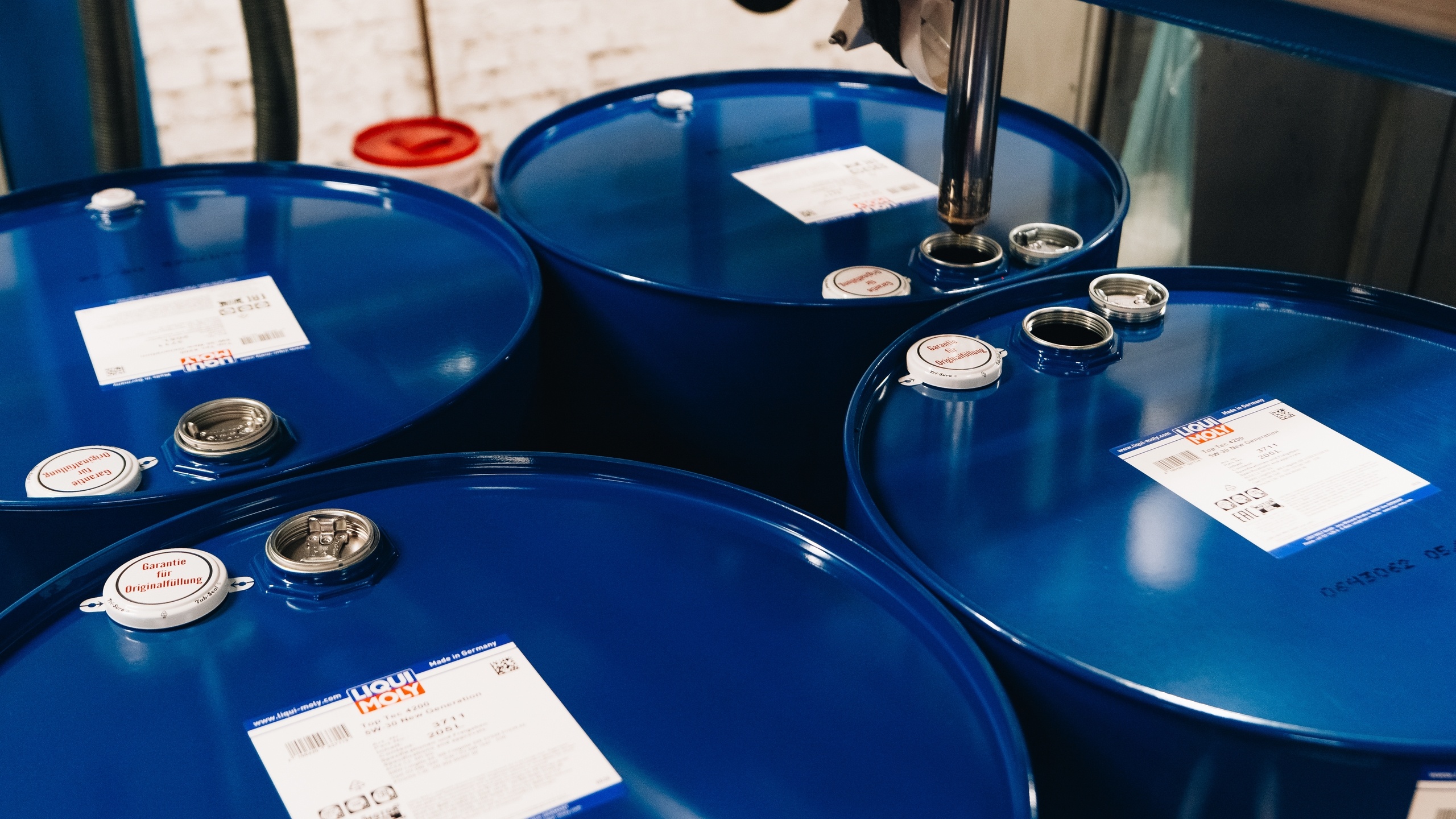
The morning was cold, maybe 50 degrees and after a brief coffee sip we were in cars heading to the harbor that was 20 minutes away from the factory It’s here where the base oil that LIQUI MOLY blends its products arrives by ship in a usual cadence of once per week.
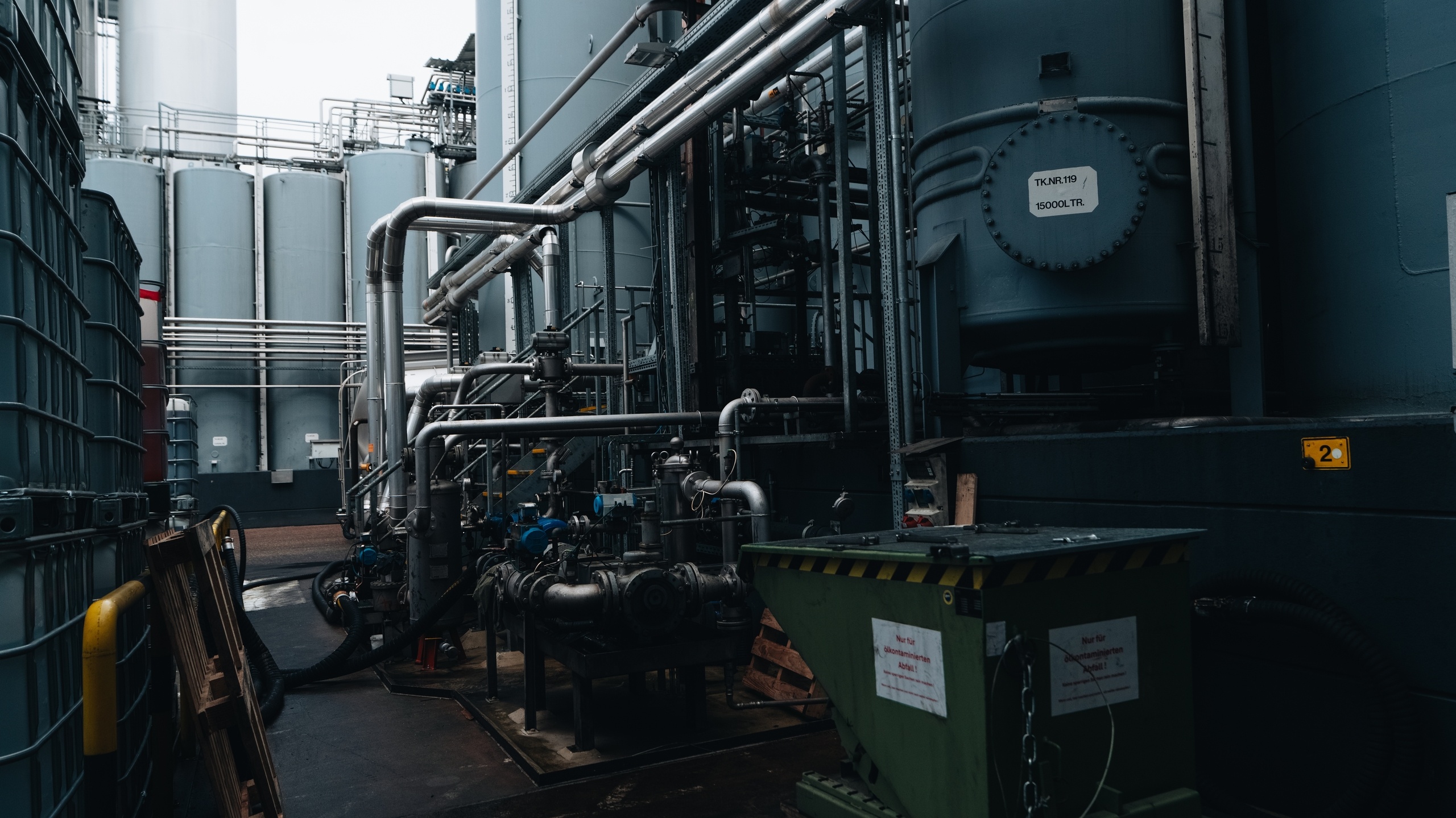
Each shipment is about 2,500 tons and the team unloads it in roughly ten hours into ten storage tanks, each holding 1.8 million liters nearby. Apparently supply has gotten harder since the war in Ukraine and since Germany has no domestic oil, it makes for a tough Christmas dinner at times.
First myth busted? The stuff coming off that ship is already refined. I'd assumed somewhere in the back of my brain that a factory like this had a giant cracking tower out back, that there was real industrial alchemy happening on site. There isn't.
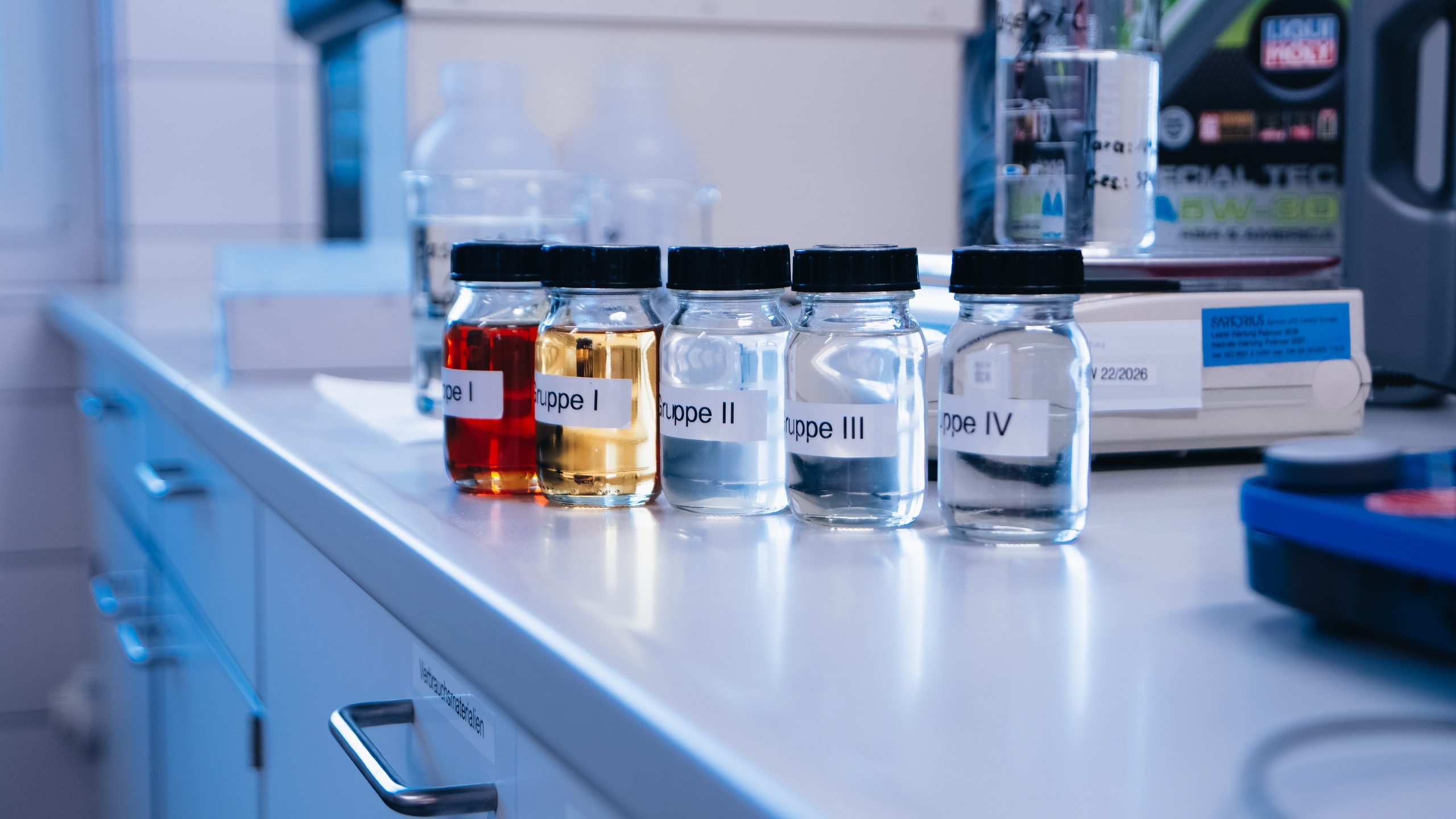
LIQUI MOLY buys already-refined base oil from refineries elsewhere in the world and turns it into something an engine can actually live on. They're blenders, not refiners. The crude-to-base-oil step happens upstream, at one of the global refineries that produce what the industry calls Group 1, Group 2, Group 3, and Group 4 base oils. Group 1 looks gold. Group 2 and Group 3 look like water. The first time I saw Group 2 base oil up close I was sure somebody had poured a glass of seltzer into a jar by mistake. Modern base oils are completely clear, which is the second thing that broke my head a little, because every internet argument I've ever read about "real" oil treated dark oil like it meant something good. The opposite is closer to the truth, but we'll get there.
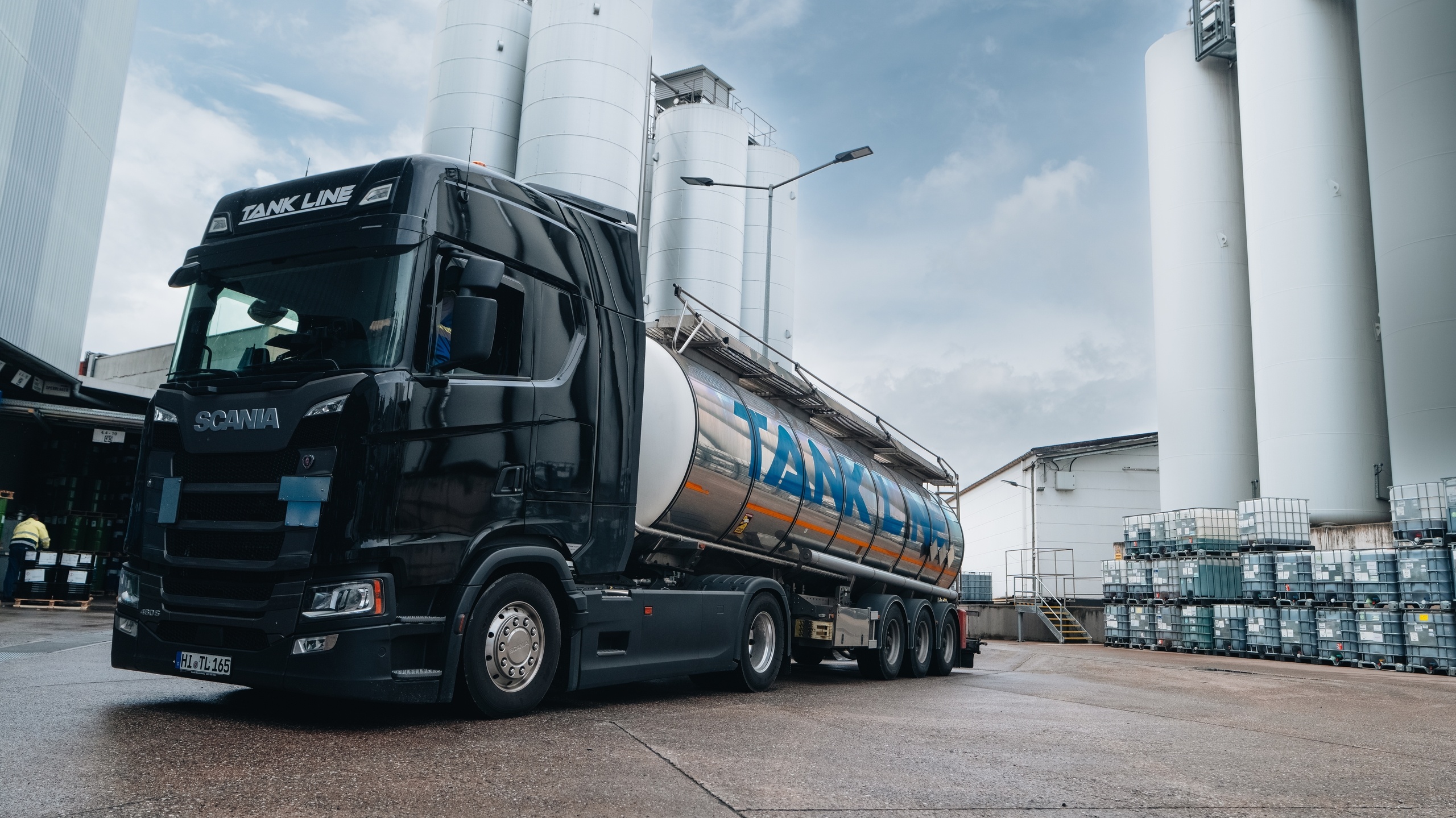
Before that base oil ever makes it into a LIQUI MOLY bottle, it's already been checked from a dozen angles. Third-party testing on the shipment. On-site testing when it arrives. Lab work on the truck before they even open the valve. By the time it reaches a blending tank, several teams have already signed off on it, and the people doing the testing aren't all on the same payroll. I assum that’s a chunk of why real motor oil costs what it costs.
Christian, our host on the production side, summed it up in a sentence as we stared at 3 people inspecting oil from the same truck we just saw 30 minutes prior at the port. "This is the quality. That is why we have a lot of approvals."
What's actually inside a bottle of motor oil?
Motor oil is three things.
The first is base oil. That's the clear liquid I just described coming off the ship.
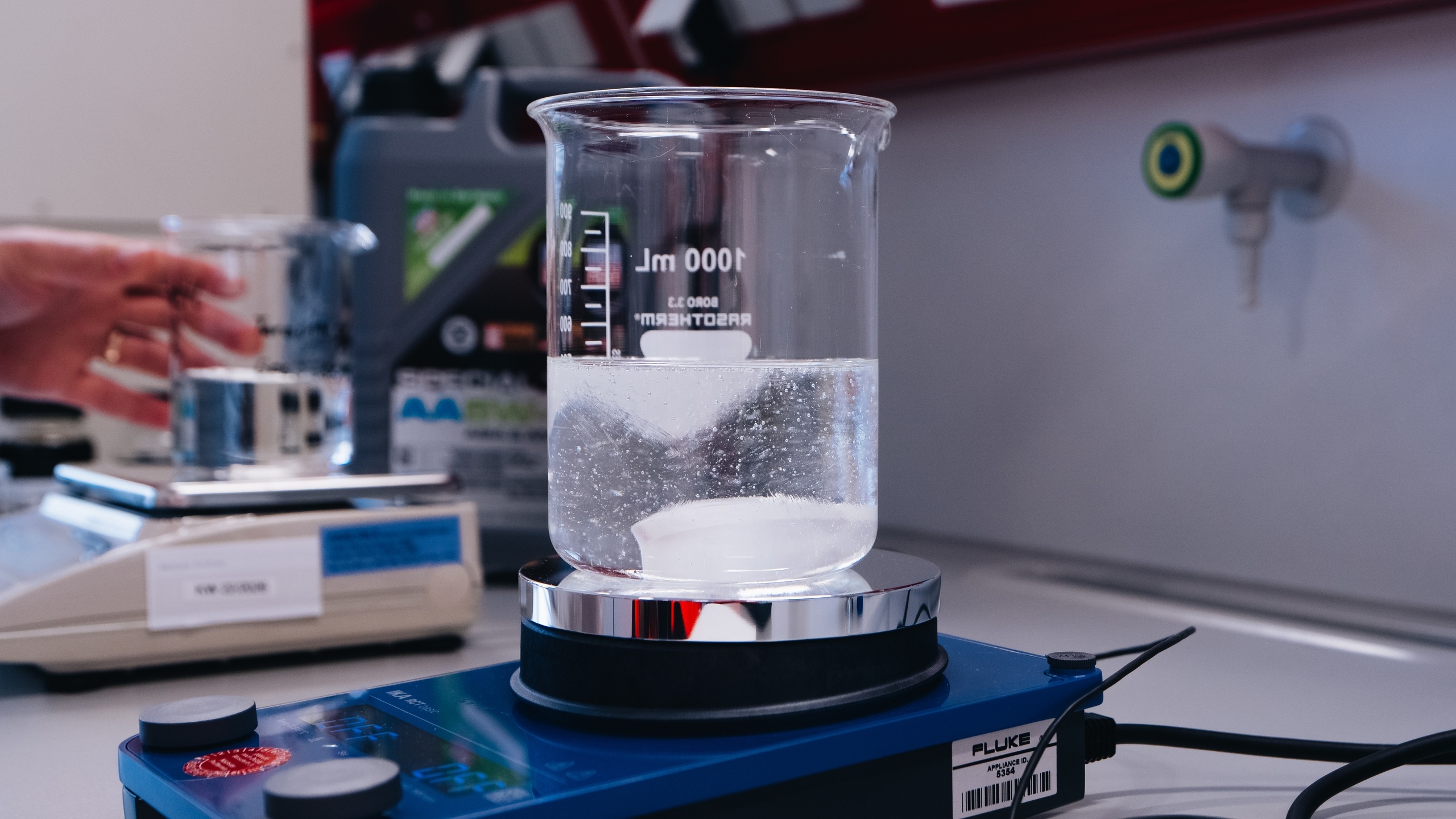
The second is a viscosity index improver. Andreas, the application engineer who walked us through the lab in the afternoon, picked up a beaker of the stuff while we were mixing and said, "This is basically a plastic sheet dissolved in oil. Same chemistry as the bags at the grocery store. Different molecules, different masses, but it's a polymer." The polymer is what keeps the oil thick at high temperatures so the protective film holds up when your engine gets hot. Without it, you'd have a fantastic cold-start oil that would shred itself the second your turbo got happy.
The third is the additive package. And the additive package is the part nobody talks about clearly, which is convenient, because it's also the part that does most of the actual work and there are only four premiere companies on the planet that make the additive package inside a real bottle of motor oil. Four. Not "the four biggest." Four total.
LIQUI MOLY doesn't make their own additive package. Nobody at the consumer level does. The additive companies sit in direct conversation with Volkswagen, BMW, Mercedes, Toyota, GM, Stellantis, and the rest. The engine manufacturer says, "I'm building this engine, the oil needs to do this." The additive house formulates a package. They sell it to oil blenders like LIQUI MOLY who have proved their brand through quality and consistency, and voila. The manufacturer buys LIQUI MOLY oil for its engines.
A blender like LIQUI MOLY buys the package, buys the base oil, buys the polymer, and mixes a finished product around all three pieces while checking its mixture constantly.
Now these folks have had a seat at the additive table since the 1970s, when modern motor oil development really took shape, and they've earned approvals across more OEMs than most of their competition. By working with the additive package companies for the last few decades, it’s what’s allowed LIQUI MOLY to earn approvals and certifications for mixing with a variety of OE manufacturers like BMW, Volkswagen, Nissan, Toyota and more.
But What Are You Actually Paying For?
Andreas told me that one of LIQUI MOLY's flagship products cost somewhere between six and ten million dollars to develop in testing alone. Not staff. Not formulators.Just tests. Building a real engine oil program from scratch, he said, is a two-digit million dollar investment minimum, and that's before anyone's put a bottle on a shelf. So when you’re looking at new formulations or a product that needs OEM approvals on, it’s easy to see why some brands just copy homework, while others choose to jump right in.
And that’s something you ask me all the time. Is the cheap stuff really that much worse? I asked Andreas the same thing, standing in his lab while somebody's used truck oil was running on the bench behind us. His answer didn't have the contempt I was half expecting. He talked about the gap the way you'd talk about the difference between a hand-built engine and a crate motor. They'll both run, but they're not the same thing.
The meaningful differences between real motor oils show up in three places, and none of them is the color of the bottle or the words on the front label.
The first thing to read is the OEM approval list on the back. A bottle that carries a current Volkswagen, BMW, or Mercedes approval has been tested against that manufacturer's actual protocol, and that protocol isn't cheap to pass. If a bottle doesn't carry an approval that your car asks for in the owner's manual, the oil might still be a perfectly fine oil. It just isn't the oil your manual asked for. They can say it’s for a Mercedes or “European” but it needs the actual approval list on the back.
After that comes the SAE grade. The 5W-30 on the front of the bottle is a public standard, set by SAE J300. It tells you how the oil flows when it's cold (the 5W part) and how it holds its viscosity at operating temperature (the 30 part). What it doesn't tell you is what the oil should actually be doing at those temperatures. It's a flow window, not a guarantee. Think of sheer stability for instance, a 5W-30 doesn’t tell you how it handles that right? So you need to know what oils have had Research & Development in high-stress applications to know it’ll hold up.
And then there's quality control. Some blenders test heavily. Some don't. You can't read that off a label. You read it off the company's track record, the approvals on the back, and the supply chain. LIQUI MOLY's investment in their own lab is the visible version of that, but every serious oil house has its own version of the same thing.
What you're paying for in the end is testing, approvals, and the audit trail behind the can. The ingredients themselves aren't where the buyer's leverage lives, because you can't read those off the back anyway. The approvals are where it lives, because somebody had to earn them.
What the lab actually does
This is where the day got nerdy in the best way.
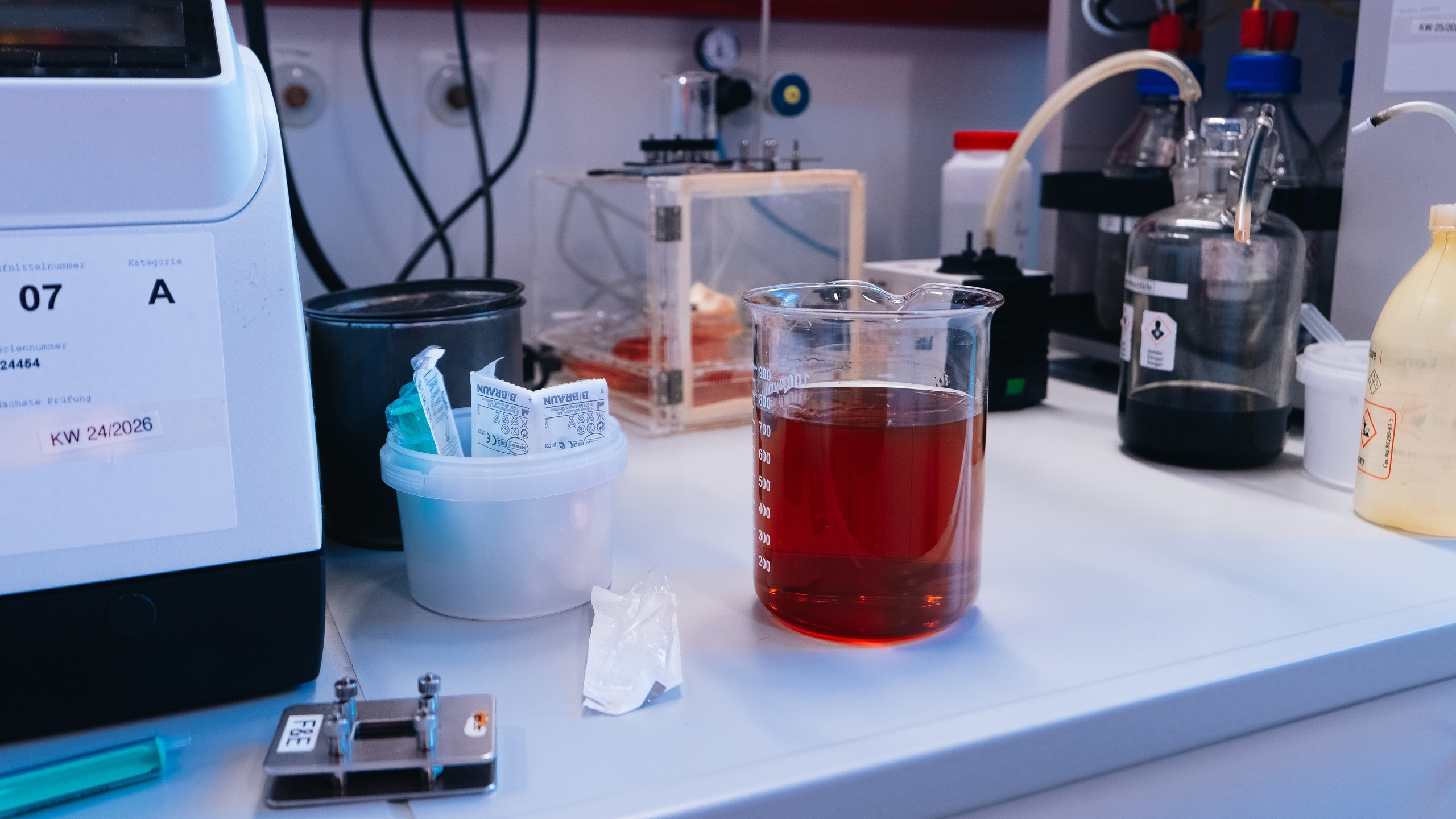
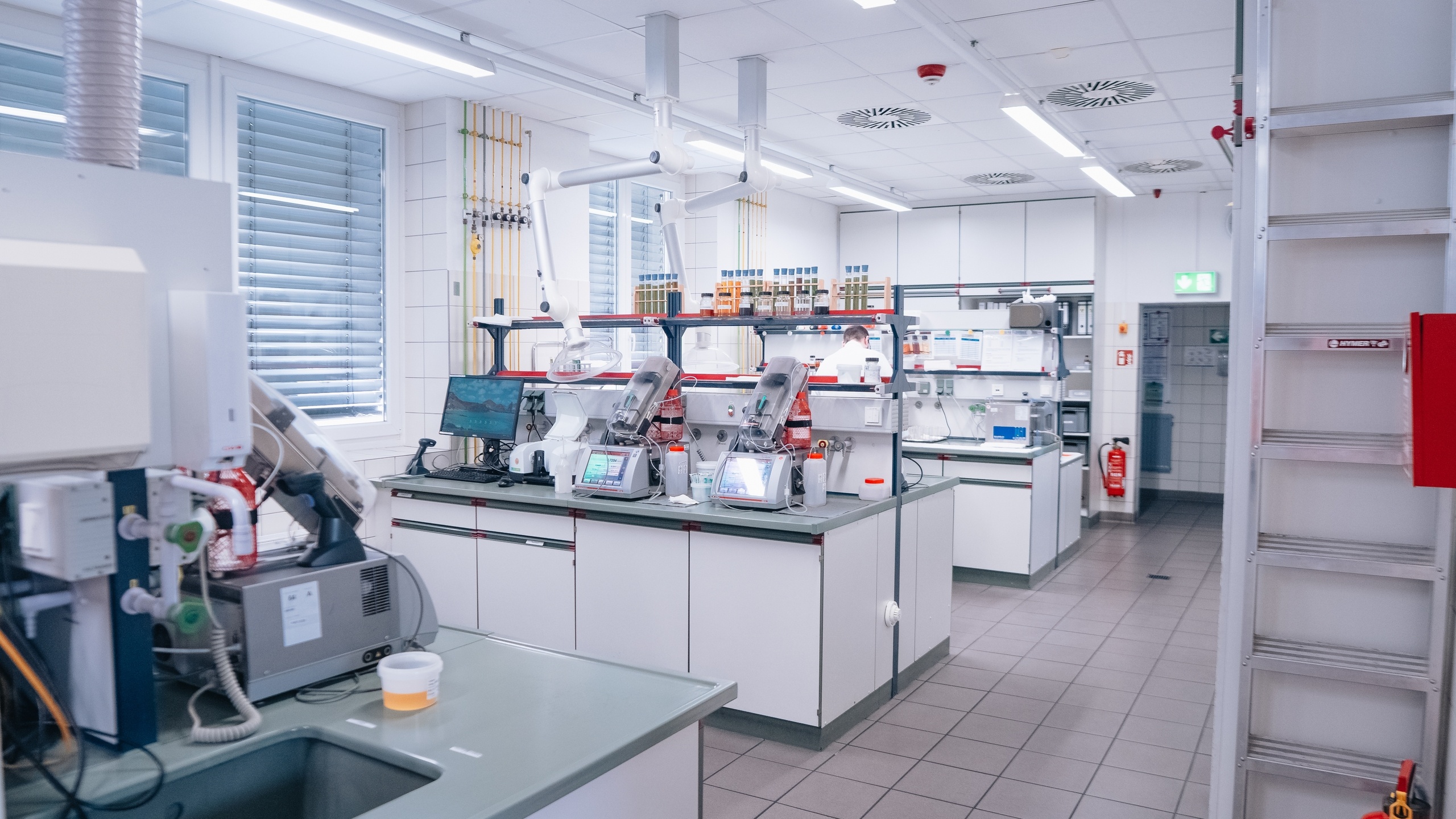
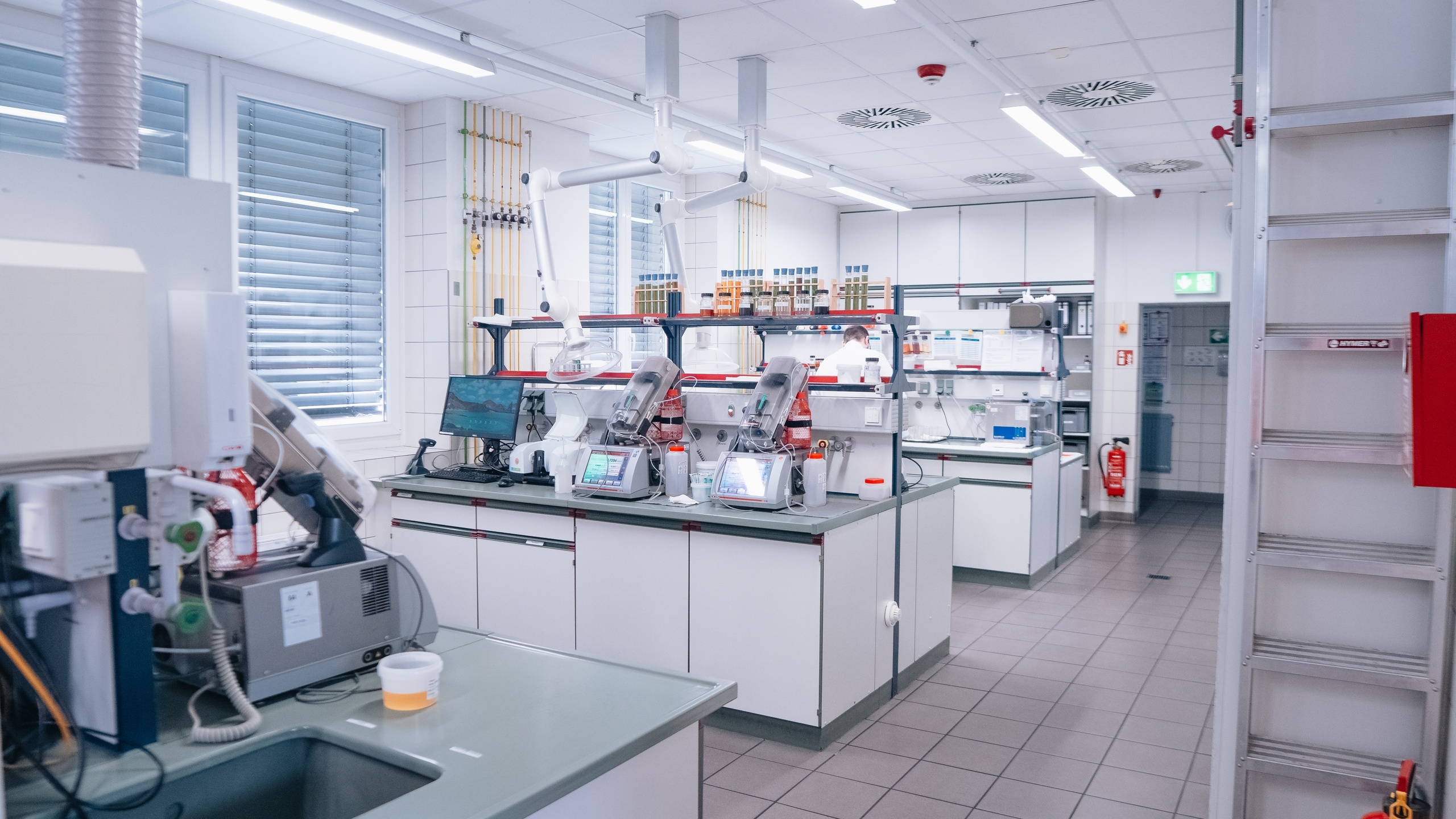
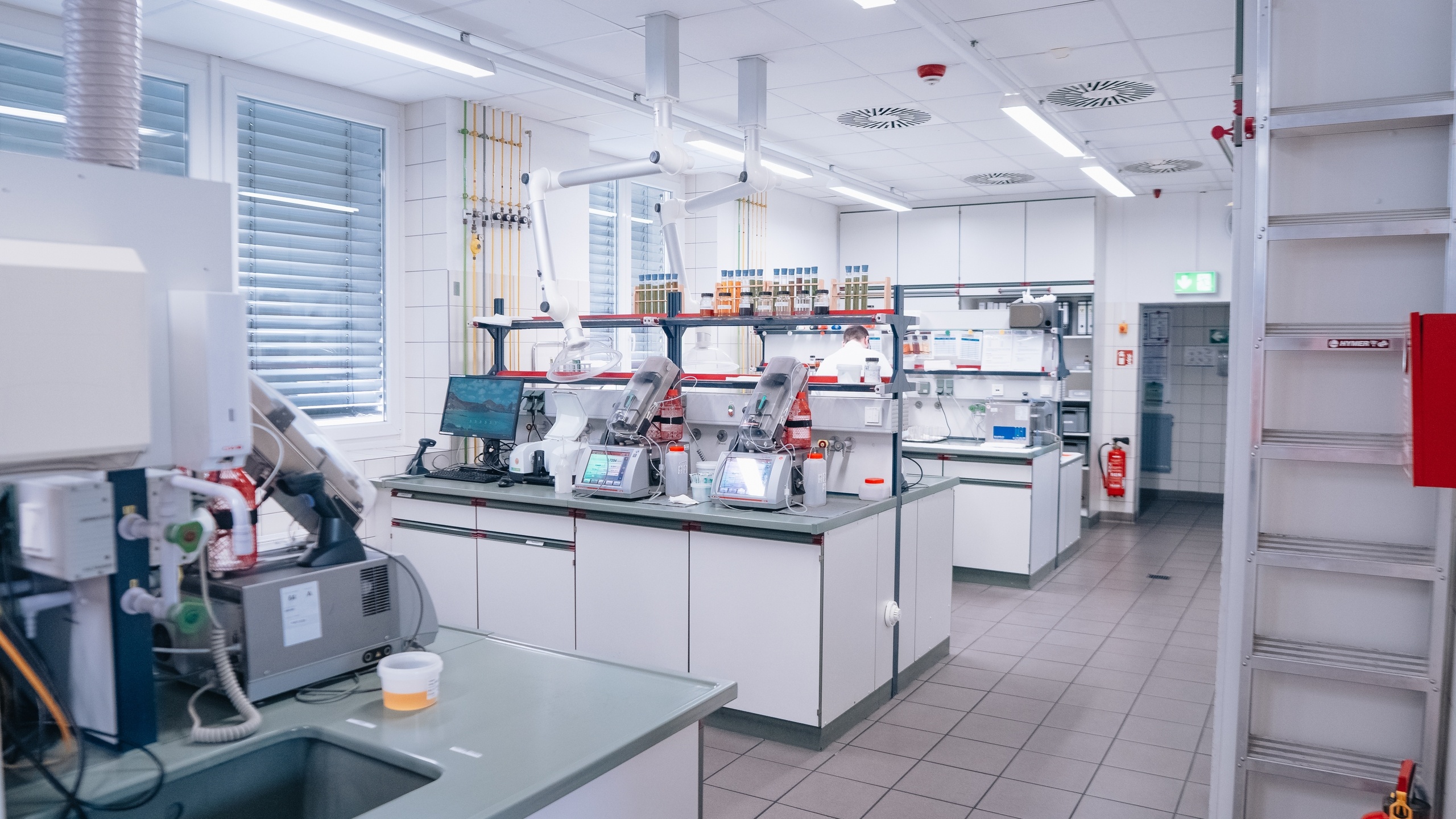
The lab runs about 120 oil samples a day. Most are internal production batches. A handful are used oil samples sent in by customers who want to know what's happening inside their own engine. The team can release a production batch in up to forty minutes, which is its own quiet miracle when you think about how many samples that's juggling at any given time.
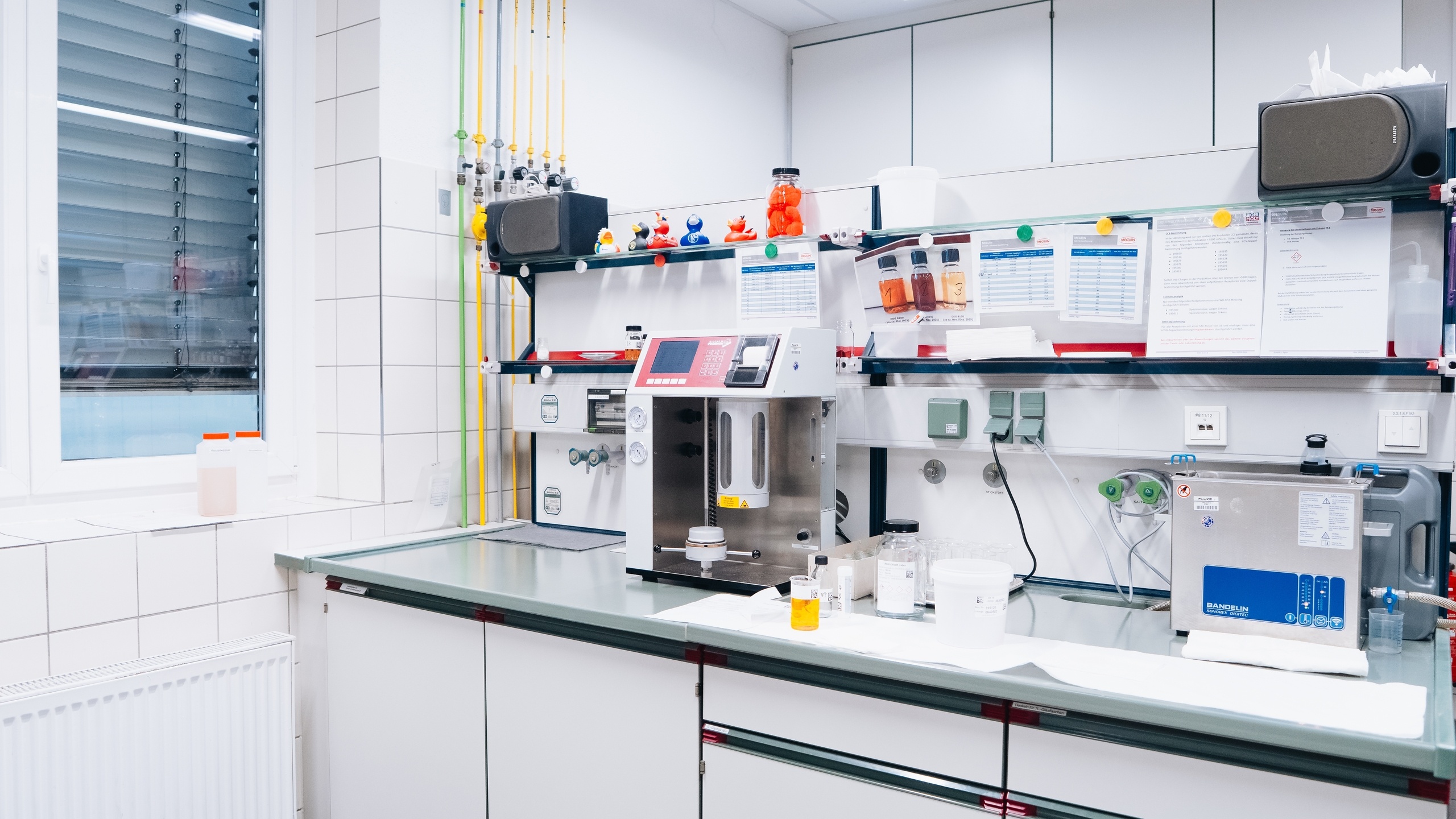
But the room is a science students incognito internet search. The sterile white light blends awkwardly with the saturated colors of various oil types that are sitting neatly above the 90 or so testing devices. These tests are what ensure the oil does exactly what it’s supposed to across an ever-growing variety of conditions. Here’s a few of them (stay with me now)
The infrared spectrum machine. You drop a sample in, wait about thirty seconds, and out comes a graph that looks like a fingerprint. Big peaks where there shouldn't be peaks tell you there's fuel in the oil. A curve that's shifted means the oil has aged. Less detail in the right places means soot. Andreas said it the cleanest way: "It doesn't tell you how much. It just tells you what." 99% of the time you’re getting your oil tested, it’s going into one of these.
The ICP analyzer. This one heats the sample to 10,000 degrees, ionizes the atoms, and reads the photons that come off them. Each element emits at its own wavelength, so the machine can read out exactly how much zinc, phosphorus, calcium, sulfur, and everything else is in any batch. Every number on every additive line has to land in the right place every single time, which is a much harder problem than it sounds when you're moving 25 tons of oil at once.
The cold-cranking simulator. This one chills oil to minus 25, minus 30, or minus 35 degrees Celsius, depending on the grade, and measures how much torque it takes to spin a fluid that cold. That's what your starter motor experiences on a Wisconsin January morning or a Calgary February. Each SAE grade has a maximum allowable viscosity at the CCS test temperature.
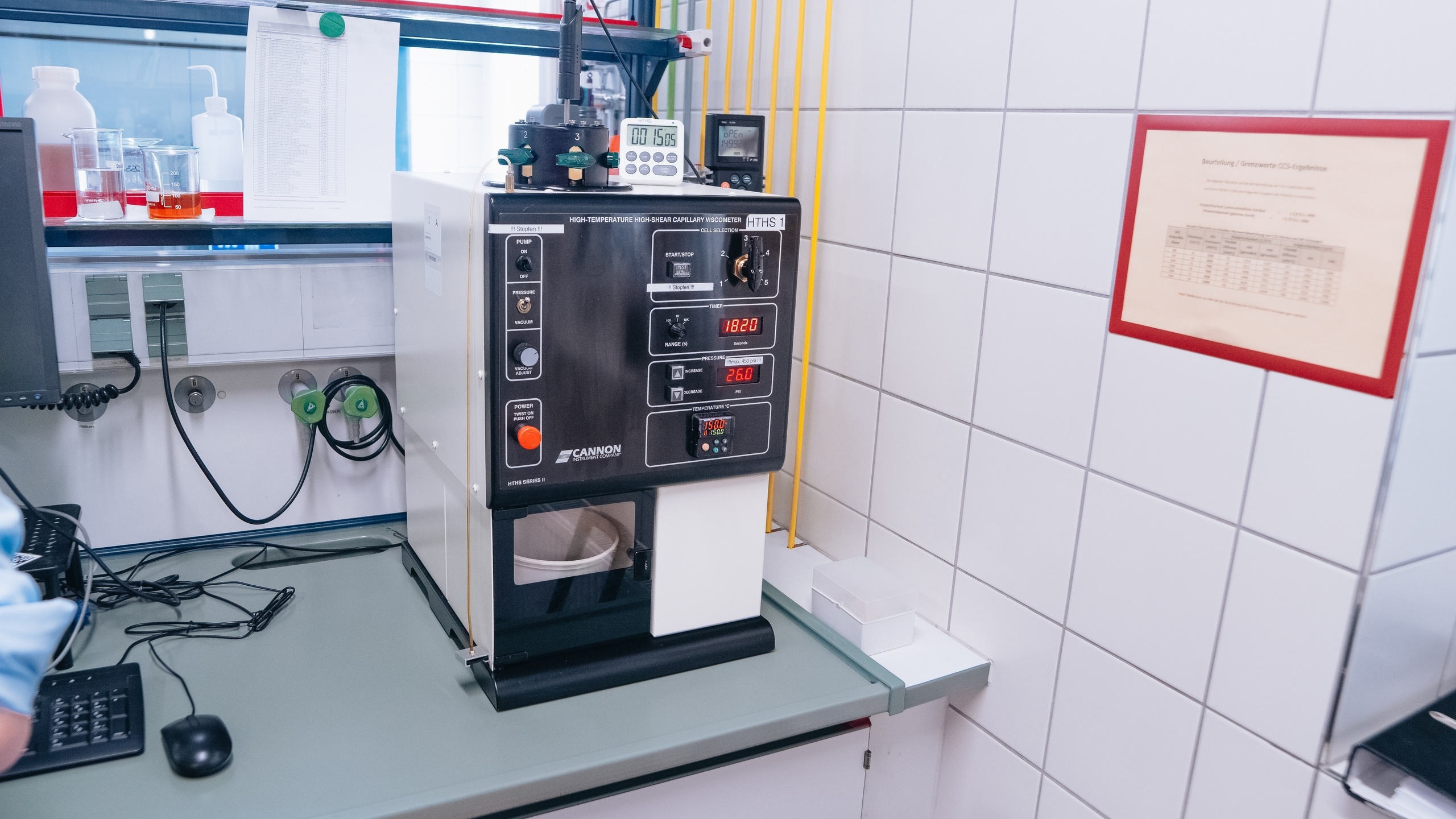
The HTHS rig. This runs at 150 degrees Celsius and applies shear to simulate what's happening to your oil between the piston ring and the cylinder wall at full throttle on a hot day. It's the test that matters most for thin modern oils, the 0W-20s and 0W-16s that every modern OEM is chasing for fuel economy. Andreas said here "Most engine oils are designed for an operating temperature of 90 to 100 degrees Celsius. Above 120, oil aging is not linear. It is exponential."
In Phoenix in July, with a tuned car running hard, the math turns on you fast. That's the case for shorter intervals in hot climates and why more often than not oil failures can happen in warmer climates easier than cooler ones.
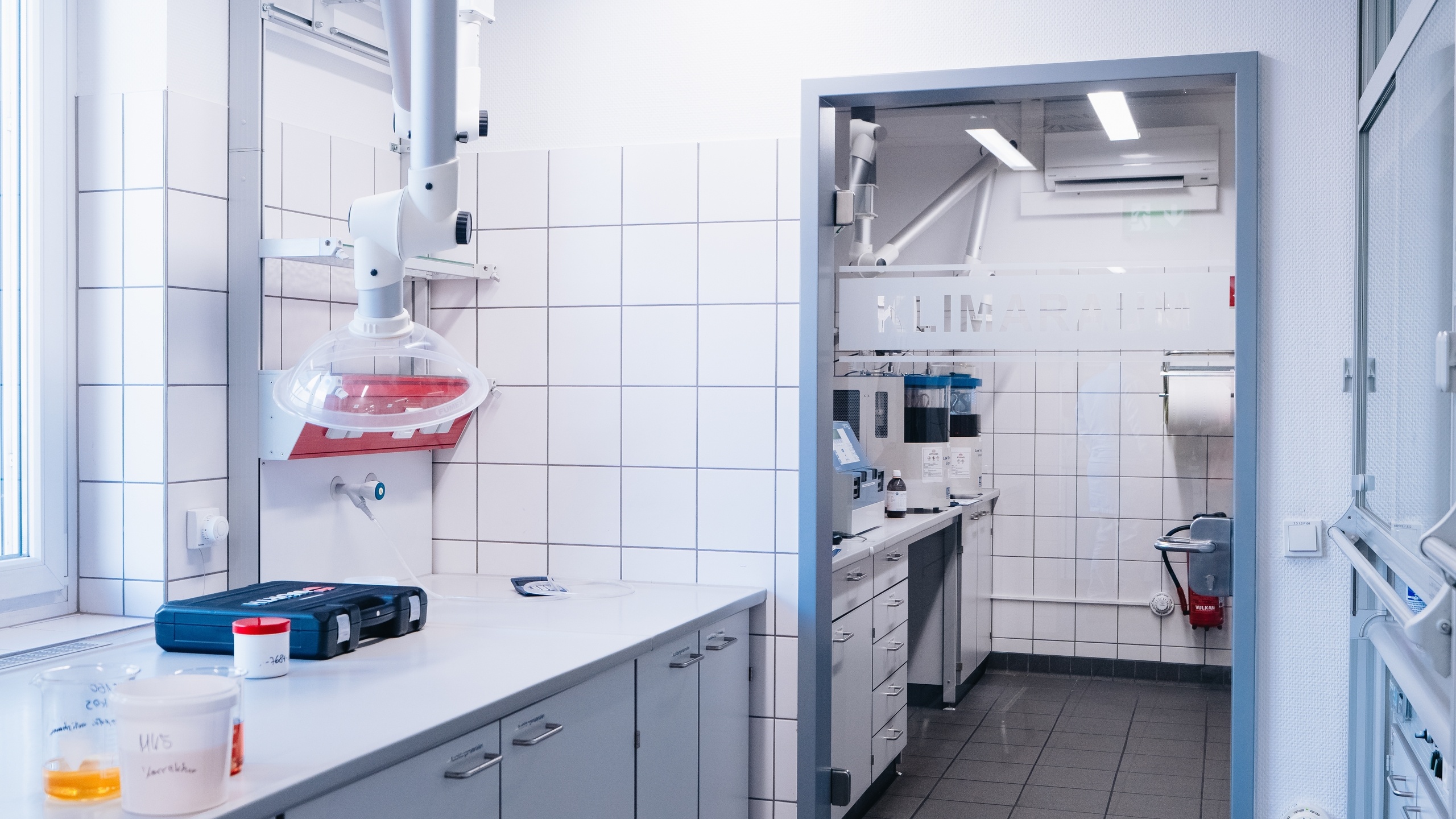
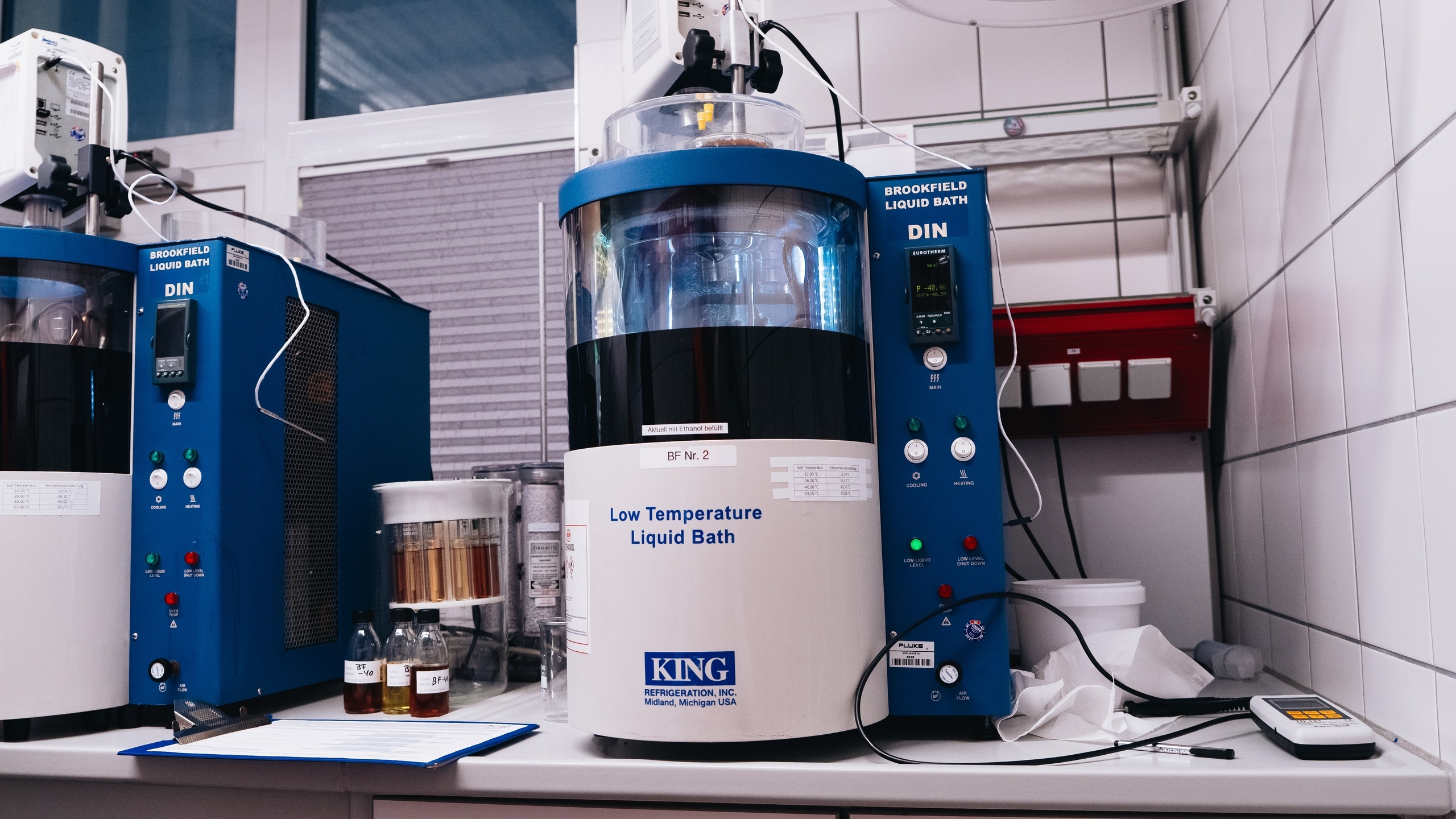
The climate room. The room itself sits at 18 degrees Celsius, which surprised me, because I'd been picturing a walk-in freezer. The cold work happens inside the instruments, not the room. The Brookfield viscometer in there, dedicated to gear oils, runs its samples at minus 40. The bath that gets it down that low uses ethanol, because ethanol stays fluid at temperatures where water would freeze and ruin the measurement.
The pour point tester. This one used to be the most patient job in the lab. Before automation, a technician would lower a sample, pull it out every three degrees, see if it still moved, and put it back. For oils that freeze at minus sixty, that's multiple shifts of lower, look, put back. Today it's automated. Lasers and light sensors handle what used to be done by tired eyes.I wouldn’t wish this job on my worst enemy.
The shear stability tester. This is the one that broke Andreas's back early in his career. Each test takes around an hour, and somebody has to sit with it the whole time. Andreas kept a cushion in there. Sit, watch, wait, record. Every test. Multiple times a day. That's the part of quality control nobody puts in the brochures, and it's the part that earns the rest.
The TBN titrator. This one measures how much acid-fighting capacity is left in an oil. Sulfur from fuel, plus oxygen from combustion, plus heat from the engine, equals acid. Modern engines are increasingly aluminum, and aluminum doesn't love acid. The oil has to carry basic components that fight that acid back, and the TBN titrator measures how much of that reserve is still in there.
Oil Color Doesn’t Matter (& Here’s Why)
Halfway through the lab tour, I asked Andreas about something you all ask me constantly. Why is some oil purple? Why is some oil green? Why is some oil dark red? The answers I'd gotten over the years had ranged from "it's the additive" to "it's the brand" to "I don't know, but mine's not dark and that means it’s good."
Andreas looked at me, sighed in a way that suggested he'd had this exact conversation about a thousand times, and said, "Color is not a quality signal for oil. Many times, it's just a marker."
Some additives carry their own color naturally. Some manufacturers add a dye to differentiate a product line. Volkswagen, for example, uses a green marker on their long-life oil so it's recognizable in the bottle and recognizable in the engine. That color is a branding decision, not a chemistry decision. It’s why those colorful vials I mentioned earlier were there, it was glorified food coloring for your engine.
Even when the color is intentional, it doesn't stay. The moment oil enters an engine, the dye starts breaking down fast under heat and shear. The bright, clean color you saw when you poured it in isn't the color that comes out at drain time, and that's normal, not damage.
“My oil looks dirty” doesn’t really mean anything. It’s going to look dirty because that’s what oil does naturally over time. It collects whatever your engine throws at it. Color tells you almost nothing. Smell tells you almost nothing. Testing tells you everything and it’s something you should probably do more often.
How We Blended our Own Oil
In the early afternoon, Andreas walked us over to a small lab bench, lined up three beakers of base oil, a tub of viscosity improver, and four small bottles of additive booster packages, and asked who wanted to mix.
We heated the base oil to 70 degrees Celsius, which is roughly 158 Fahrenheit. That's the standard mixing temperature because additives dissolve faster when the base oil is warm. The polymer went in next. You could actually see it thicken the mix the way you'd expect plastic to thicken oil. Then the additive boosters, weighed to the gram. We let the ol stir stick work its magic. The lab calls the magnetic stir bar a "fish," which is German laboratory slang apparently and I have no idea if that’s true or not.
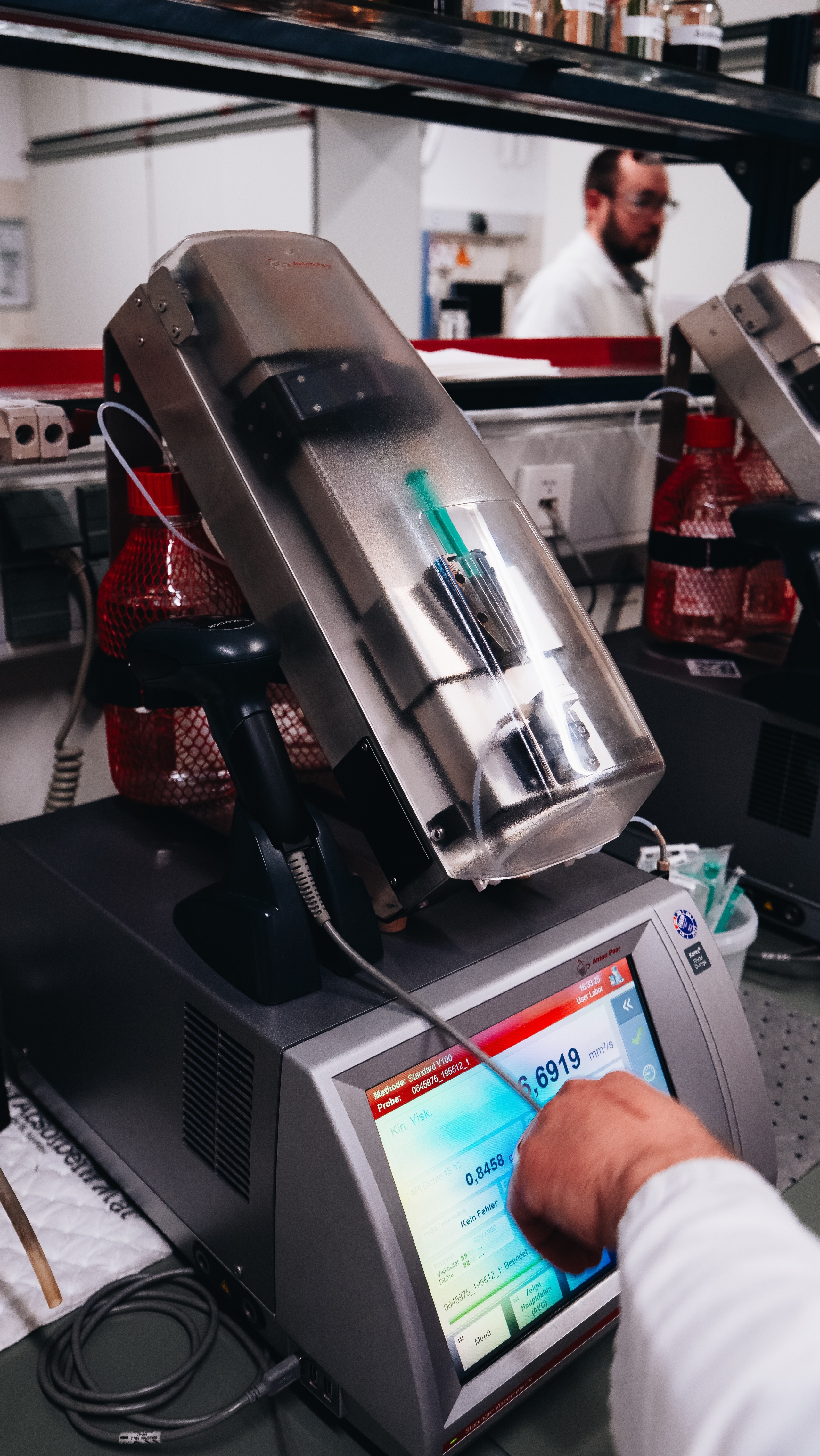
When the blend was done, we walked the sample over to the infrared machine and the viscometer. The 5W-30 version of Special Tec AA has to land inside the SAE J300 public viscosity window for any 5W-30, which runs from 9.3 to 12.5 centistokes at 100 degrees Celsius. Anything outside that and you've got something, but you don't have a 5W-30 anymore.
The viscometer screen settled at 9.8. Inside the window even though we eye-balled the ratios a bit. Then the infrared spectrum ran against the production reference for Special Tec AA. The fingerprint matched. Pass.
So we made a real 5W-30 motor oil by hand, on a lab bench, in less than an hour. Now we don’t need to talk about how every ingredient was perfectly measured for us or that the vials were all pre-setup so we couldn’t botch it BUT i’ll still take credit.
So What’s The Point In Spending Money on Oil?
Three things I thought I knew, that I don't anymore.
I used to think the price gap between cheap oil and premium oil was mostly marketing. After an afternoon in this lab, I think the meaningful differences live in three places, and the back label is where they show: the OEM approvals your bottle carries, the SAE grade and what it actually covers, and the quality control program behind the manufacturer's name. None of those things are on the front of the bottle, and putting them on the back of the bottle isn't free.
I used to think the right way to talk to my audience about oil was to drill into the chemistry. I still want to keep learning chemistry, and I'll keep sharing what I find. But the honest answer for what to actually do at the parts store is a lot simpler than that. Read the back of the bottle. Find the OEM approvals your owner's manual asks for. Match the SAE grade your engine was designed around. Trust the brand's history with that grade and that approval. That's the version of "buy good oil" that works on a Tuesday afternoon when you're trying to get home before dinner.
And I used to think the most dangerous oil decision you could make was running the wrong viscosity. I still think that matters. The bigger one is buying oil that doesn't carry the approvals your car actually asked for, from a supply chain you can't trace.
LIQUI MOLY tracks every bottle, every box, and every pallet through a QR-based traceability system because the integrity of the supply chain is part of the product. That system isn't something I'm going to explain in detail here, and I wouldn't want to. The point is that the audit trail behind a real bottle is part of what you're buying when you spend the extra money.
I need something from you
Pick up your last empty bottle of motor oil. Read the back. Find the SAE grade. Find the list of OEM approvals. Cross-check it against what your owner's manual actually requires. It'll take you about ninety seconds, and you'll feel a little smarter the next time somebody starts an oil argument on the internet. You might find that what you’re running isn’t what your engine asks for. Good on you, because it could save your engine’s life.
Then, the next time you're at the parts store, do the same thing before the bottle goes in the cart. Approvals first. SAE grade second. Brand reputation third. Color last, if at all.
LIQUI MOLY isn't the only company in the world doing this kind of work. There are other serious oil houses out there, and there are real value-priced oils that get the job done in a daily-driven sedan that lives in a garage. The point of this trip wasn't that one brand wins. The point was that there's a real engineering floor underneath this entire industry, and the bottles that respect that floor cost what they cost for a reason.
If somebody in the comments tells you all oil is the same, send them this page and give them a polite toss of a chankla.
AlexMartini is an automotive culture creator, racing driver, and founder of MartiniWorks. This article is based on a four-and-a-half-hour tour of LIQUI MOLY's Saarlouis, Germany factory in May 2026.