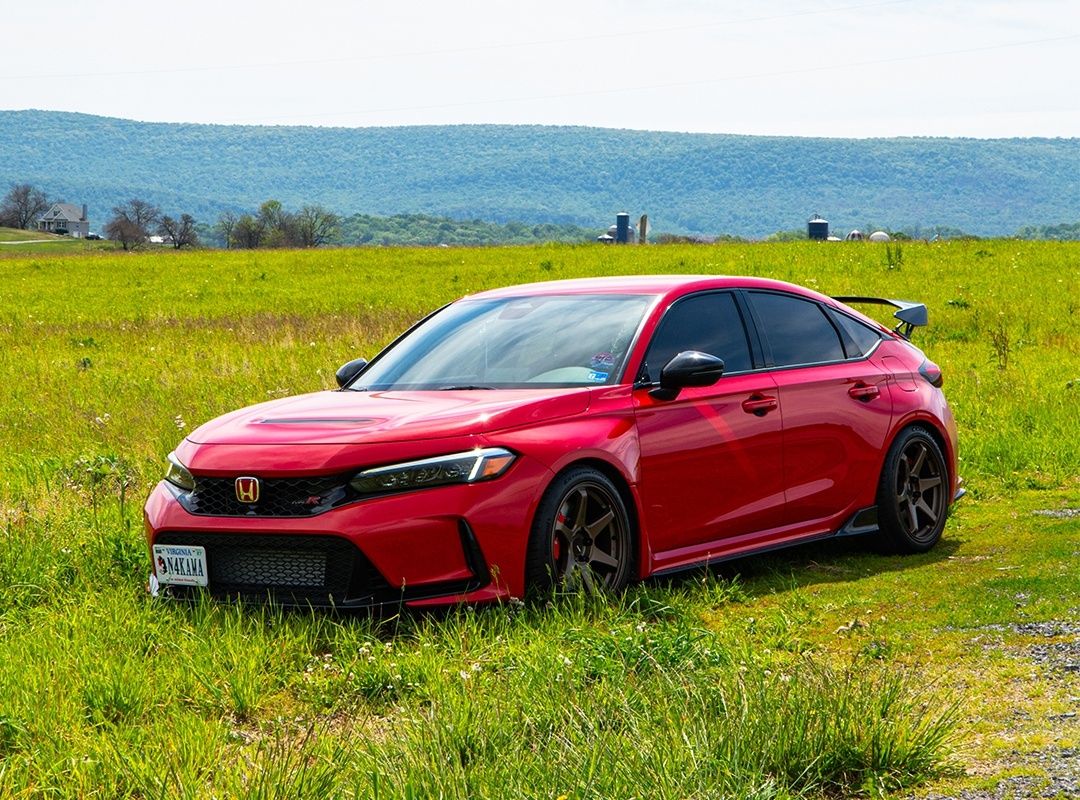
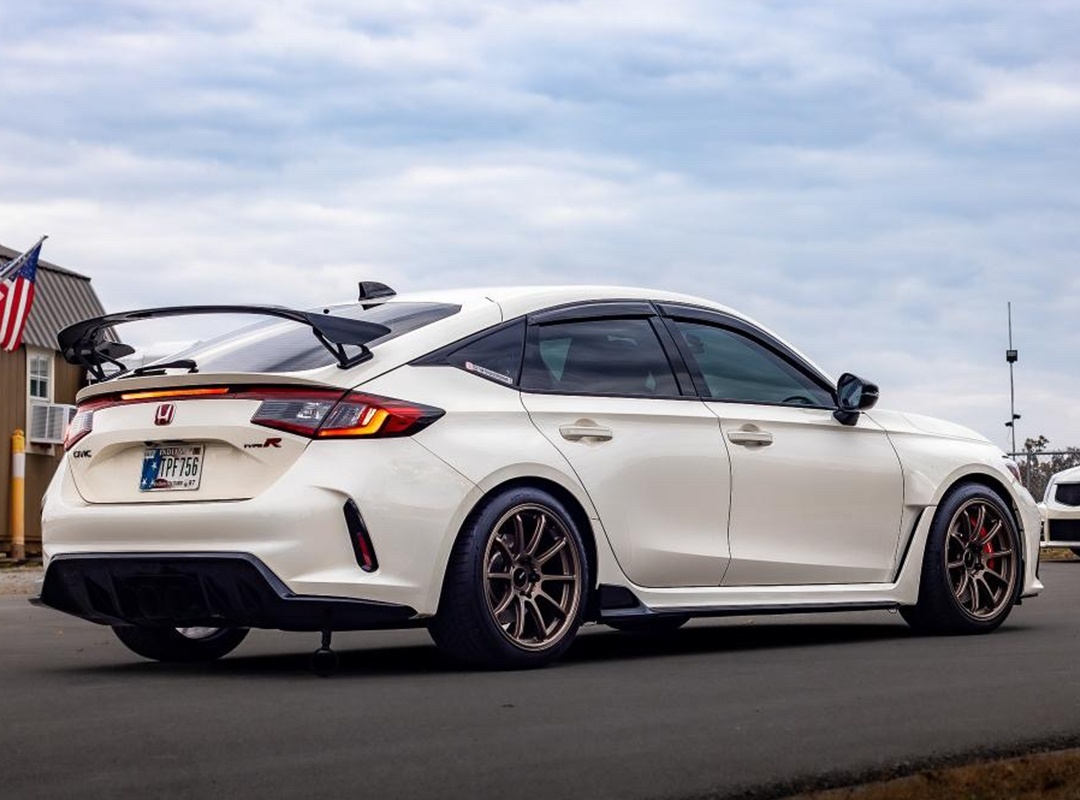
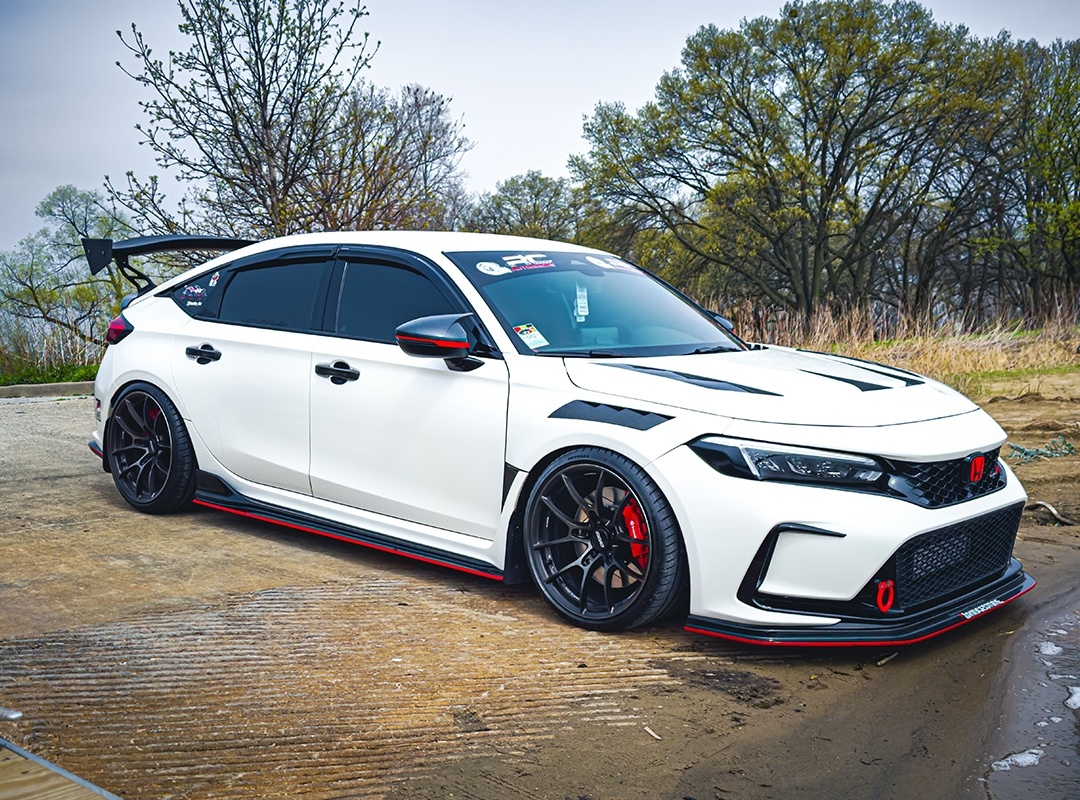
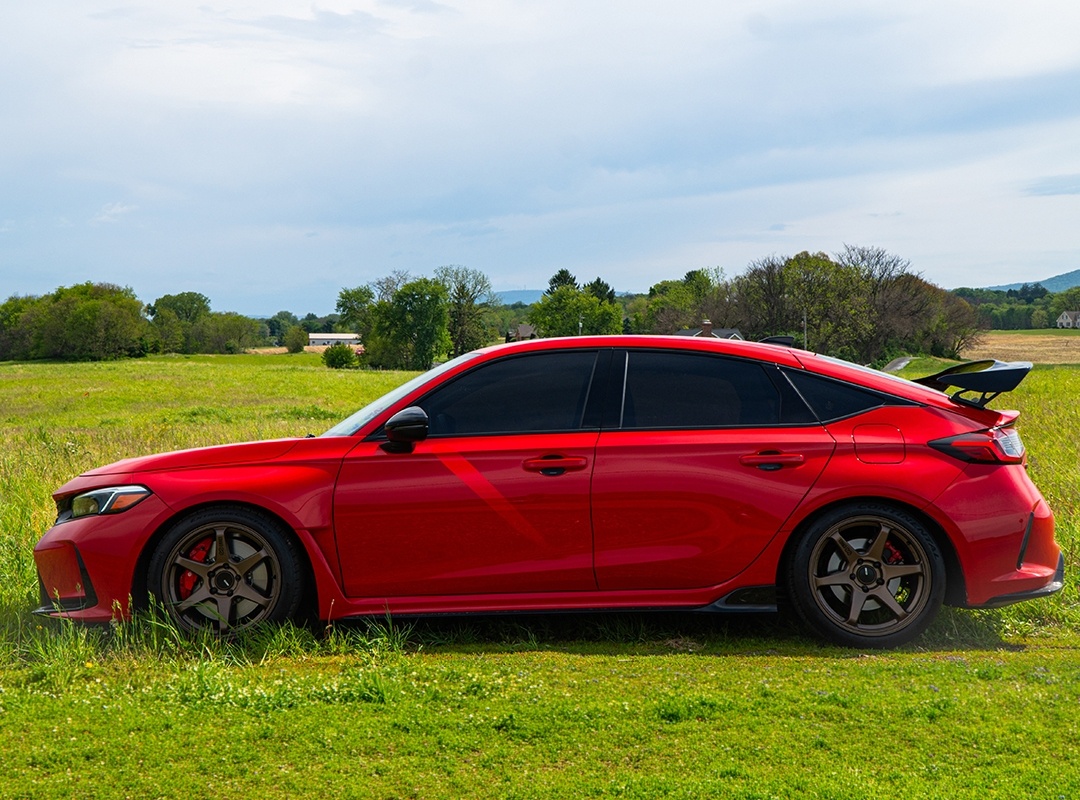
The FL5 Civic Type R is Honda finally building the grown-up Type R people kept asking for. Under the hood is the K20C1, a turbocharged 2.0L making 315 hp and 310 lb-ft from the factory. It only comes with a 6-speed manual, sends power to the front wheels through a helical limited-slip diff, and weighs 3,188 lb. It also ships with adaptive dampers and Comfort, Sport, and +R drive modes, which matters more than you'd think once you start shopping for suspension.
The good news is that this car is already a fantastic platform out of the box. The bad news is that also makes it easy to make it worse with the wrong parts. From daily driver upgrades to serious street and track builds, here's how we'd build an FL5 the right way. Let's get into it.
What Wheels And Tires Fit The FL5 Civic Type R?
The FL5 runs a 5x120 bolt pattern with a 64.1mm center bore. Stock wheel sizing is a 19x9.5 +60 wheel paired with a 265/30ZR19 Michelin Pilot Sport 4S. A lot of people downsize their aftermarket wheels to 18" diameter which better suites the car. However, 18" is the smallest you can go before you start running into the massive Brembo brakes that come equipped on this car.
Most aftermarket 5x120 wheels have a 72.56mm or 73.1mm bore, so plan on 64.1mm hub-centric rings and conical-seat lug nuts. Your stock lug nuts won't seat correctly on most aftermarket wheels. Don't worry, we got you covered there when you check out wheel and tire packages from us.
Recommended Wheel Sizing
- Diameter: 18"
- Width: 9.5"
- Offset: +45 for a flush, bolt-on fit at stock height. Go +38 only if the car is lowered and you've added negative camber.
Recommended Tire Size
- 265/35R18 on a +45 wheel
- 255/35R18 if you're lowered and running +38
Recommended Wheels
Recommended Tires
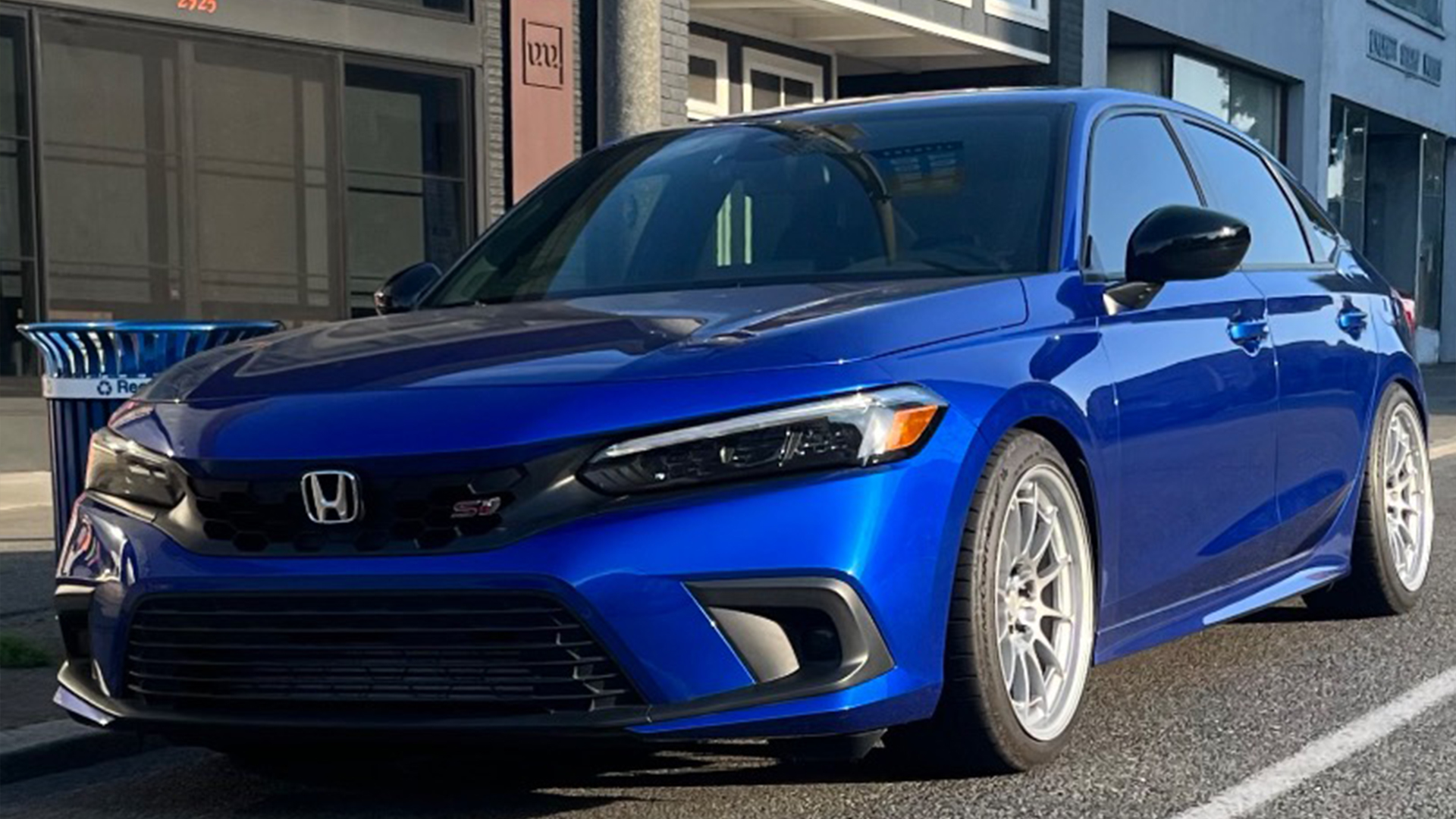
FL5 Honda Civic Type R - Enkei Triumph Wheels 18x9.5 +45 with Continental ExtremeContact DWS06+ tires 265/35/R18
Best Suspension Upgrades For The FL5 Civic Type R
Before you buy anything, we need to talk about the adaptive dampers. If you swap out your suspension for coilovers without an error canceller and you get a permanent suspension warning on the dash and lose your drive modes. Every coilover below either includes a canceller or needs one added.
Coilovers
Coilovers make sense if you track the car or want to fine-tune ride height. For a daily that just needs to sit better, springs are the smarter buy.
- Öhlins Road & Track: Our top pick for street and track. Plan on the Öhlins ADS Cancellation Kit, which is sold separately. It can ride firm out of the box, so give it a break-in period and back off the damping before you judge it.
- HKS Hipermax S (with canceller): The canceller comes in the kit, so it's one box and done. 30 levels of damping adjustment.
Lowering Springs
Springs keep your factory adaptive dampers and drive modes working, which is a big deal on this car.
- Eibach Pro-Kit: Our pick for daily drivers. About 1.0" front and 0.7" rear, and Eibach tested it with the factory dampers.
- Swift Spec-R: About 1.0" all around and a little firmer. Better if you're heading toward track days.
- BC Racing ASP (Adjustable Spring Perch): Turn your OEM suspension into a coilover system. Lowering springs with adjustable ride height.
Sway Bar Upgrades
The FL5 is already well balanced, so a bigger rear bar is a tuning choice, not a fix. It adds rotation, which is fun on track and less fun on a cold, damp on-ramp.
- Spoon Sports rear stabilizer bar: 25.4mm hollow, FL5-specific part number. Spoon itself warns the rear gets livelier in damp or cold conditions.
- Cusco 22mm rear bar: Solid and a milder step up from the stock 20.5mm bar. A good middle ground for street cars.
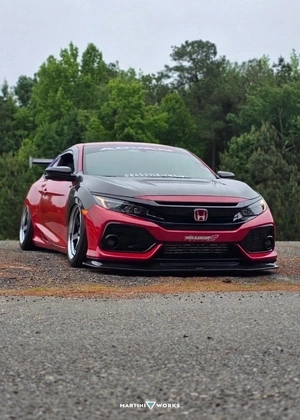
FL5 Honda Civic Type R lowered with Eibach lowering springs
Bolt On Performance For The FL5 Civic Type R
The K20C1 responds well to a tune, but it hates heat. Bolt-ons on their own make small gains. Bolt-ons plus a tune is the recipe you want to follow.
Intake Systems
An intake helps the turbo breathe and makes the car a little louder in the good way. One thing to check first: some tunes want a stock-sized MAF housing, so ask your tuner before you buy.
- Eventuri FL5 intake: One of the top performers in back-to-back intake testing on this car, and it sounds great. However it is one of the most expensive intakes on the market.
- PRL Motorsports High Volume Intake: No tune required and it carries a CARB EO number (D-878-8), so it's emissions-legal in all 50 states.
- aFe Takeda Momentum: A sealed housing that pulls air straight from the factory inlet instead of hot engine bay air. aFe claims up to 19 hp and 15 lb-ft with the oiled Pro 5R filter. It's not CARB exempt, so it's off the table for California cars.
Intercooler Upgrades
This is the most important bolt-on on an FL5. In PRL's testing, a fully heat-soaked stock car dropped from 302 whp to 237 whp, with boost falling from 25 psi to about 16 psi. Their upgraded intercooler held 270 whp under the same conditions.
- PRL Motorsports intercooler: Proven numbers on this exact car. Pair it with their intercooler piping kit if you're tuning.
- Mishimoto FL5 performance intercooler: Core is 140% larger than stock. A strong option if you live somewhere hot.
Exhaust Systems
The FL5 has a center tip with a valve that opens in the sportier modes. Keep that valve if you daily the car: it's your drone switch.
- Remark triple-tip cat-back: Keeps the factory valve. It drones around 3,000 to 4,000 rpm in Sport and +R, but Comfort mode closes it down.
- HKS Hi-Power: Loud. 93 dB at idle versus 80 dB stock, with no valve. Great for weekend cars, not for early-morning commutes.
- AWE Touring Edition: Our pick for daily drivers who want more sound without the headache. There's no valve, but the Touring Edition adds a midpipe resonator and AWE's 180 Technology rear section, built to cancel drone at highway speed. It's a full 3" stainless cat-back that weighs 46 lb versus 50.5 lb stock, and AWE claims up to 14 whp with no tune. If you want more volume, go with the Track Edition.
Tuning
The FL5 ECU has to be unlocked before it can be tuned, and that means mailing it in. Once unlocked, a tune on a stock car is worth roughly 40 whp, and bolt-on cars with a pro tune have made over 360 whp on a Dynojet.
- Hondata FlashPro: Our pick. It's the go-to Honda tuning platform and gives you the most tuner support.
- COBB Accessport: FL5 support since August 2024. Easy to use with off-the-shelf maps.
One honest note: a catted downpipe adds power only with a tune, and catted pipes like the Two Step Performance downpipe aren't CARB approved. Know your local emissions rules before you buy one.
The Biggest Mistakes When Modifying the FL5 Civic Type R
The FL5 is hard to ruin, but people still manage. Here's what to avoid.
First: coilovers without a canceller. Pull the adaptive dampers without one and you'll live with a suspension warning light and no drive modes. Budget for the canceller before you buy the coilovers.
Second: wheels that don't actually fit. Anything under 18" won't clear the Brembos, and spoke shape matters too, so confirm caliper clearance for your exact wheel. Skipping hub rings or reusing the stock ball-seat lug nuts on a conical-seat wheel is how lug nuts come loose.
Finally: making power and ignoring the rest. Heat, the clutch, and oil all need attention. Track cars running hot oil and coolant lose power, the stock clutch has worn out quickly on cars making around 450 lb-ft.
The Ultimate FL5 Honda Civic Type R Build
The FL5 Civic Type R doesn't need much, but what it does need is the right parts in the right order. Start with a lighter 18" wheel and tire setup, sort the suspension and alignment, fix the heat, then tune it. Do it that way and you'll have a car that's faster, more consistent, and still easy to live with every day.
Ready to start your build? Check out our FL5 Civic Type R parts and reach out if you have fitment questions.
Mod your car with your friends at MartiniWorks.